Education has historically adhered to a structured, rigid model designed around the fictional archetype of the “average student.” For generations, teachers delivered a singular lesson plan to an entire room of children, pacing the instruction to match a generalized curriculum schedule. Students who understood the material quickly found themselves waiting in boredom, while those who struggled to grasp the initial concepts were frequently left behind, their learning gaps widening with every subsequent lesson.
The traditional system did not fail due to a lack of teacher dedication; rather, it struggled because managing thirty unique intellectual trajectories simultaneously exceeds human bandwidth. The emergence of modern educational technology has systematically dismantled this century-old limitation.
Adaptive learning technology represents a profound structural evolution in the mechanics of knowledge acquisition. By leveraging advanced data science, machine learning algorithms, and cognitive psychology frameworks, adaptive platforms transform passive digital textbooks into dynamic, responsive educational ecosystems. These tools actively monitor how a student interacts with information, mapping cognitive patterns in real time to alter the difficulty, format, and cadence of the material presented.
As school districts globally navigate the complexities of post-pandemic learning loss and shifting economic demands, implementing responsive technology is no longer an optional classroom luxury. It has become a foundational imperative for fostering future-ready intelligence.
Defining the Core Architecture of Adaptive Platforms
Understanding the true utility of adaptive learning requires looking beneath the user interface to examine the algorithmic engine driving the student experience. Many casual observers mistakenly conflate adaptive learning with simple digital differentiation or basic branching logic. True adaptive platforms, however, utilize deep data analytics to build a complex, evolving profile of each learner. The technology operates through three interconnected structural models:
A. The Content Model: This acts as the curricular skeleton of the platform. Instead of organizing information in linear chapters, the system breaks subjects down into granular concepts, known as knowledge nodes. These nodes are mapped in a complex web of prerequisites and relationships. For instance, a platform does not simply see “fraction multiplication” as a standalone topic; it recognizes it as a node dependent on absolute mastery of basic multiplication, division concepts, and spatial visualization.
B. The Learner Model: This is the dynamic profile of the individual student, continuously updated with every click, response time, and submission. The system tracks absolute correctness alongside underlying cognitive behavior. It measures how long a student pauses before answering, whether they change their mind multiple times, and what specific errors they repeat. This data creates a predictive map of the student’s current knowledge state, cognitive load capacity, and confidence level.
C. The Instructional Model: This serves as the decision-making engine or pedagogical brain of the software. By cross-referencing the Content Model with the Learner Model, the instructional engine determines the optimal next step for the individual student. If the system detects that a student is answering geometry problems incorrectly because they lack basic algebraic manipulation skills, it seamlessly shifts gears. It pauses the geometry track and serves a micro-lesson in algebra to repair the shaky foundation before moving forward.
This three-part structure enables platforms to achieve what educators refer to as the “zone of proximal development” the optimal learning sweet spot where a task is neither so easy that it induces boredom nor so difficult that it causes paralyzing frustration.
The Core Features of Adaptive Classrooms
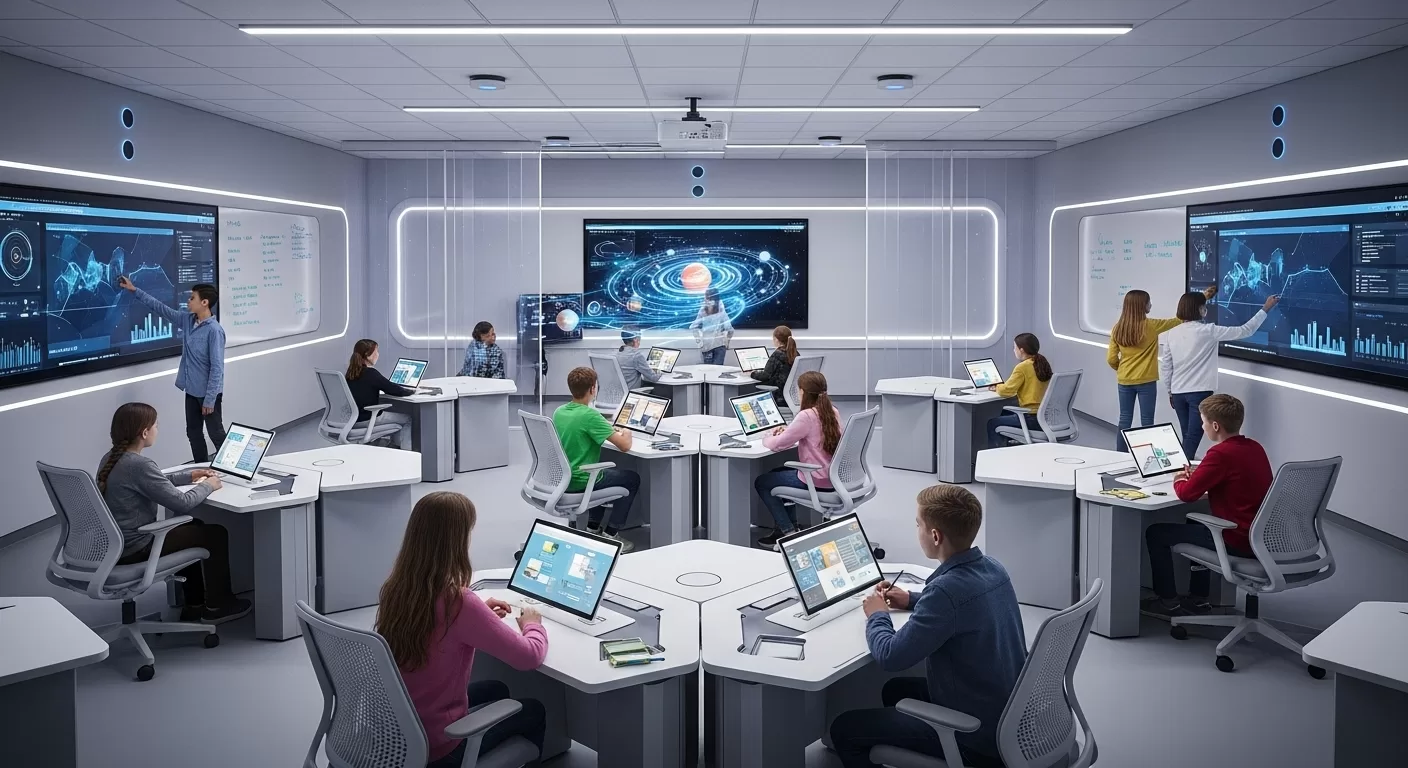
When deployed effectively within a physical or hybrid school environment, adaptive technology manifests through a suite of unique architectural features that redefine daily instruction. These components ensure that educational experiences adapt to the child, rather than forcing the child to conform to the system.
+-----------------------------------------------------------------+
|              MODERN ADAPTIVE CLASSROOM ARCHITECTURE              |
+-----------------------------------------------------------------+
|                                                                 |
|  [ Real-Time Data Dashboards ] ----> Empowers Teacher Insights  |
|                                                                 |
|  [ Dynamic Pacing Systems ] -------> Prevents Learning Gaps      |
|                                                                 |
|  [ Multimodal Content Assets ] ----> Maximizes Engagement        |
|                                                                 |
+-----------------------------------------------------------------+
A. Real-Time Analytics Dashboards for Educators
One of the most profound features of adaptive classrooms is the sudden transparency of student cognition. Historically, a teacher had to wait for weekly quizzes or end-of-unit exams to identify which students missed a concept. Adaptive platforms eliminate this blind spot by piping live telemetry into centralized teacher dashboards.
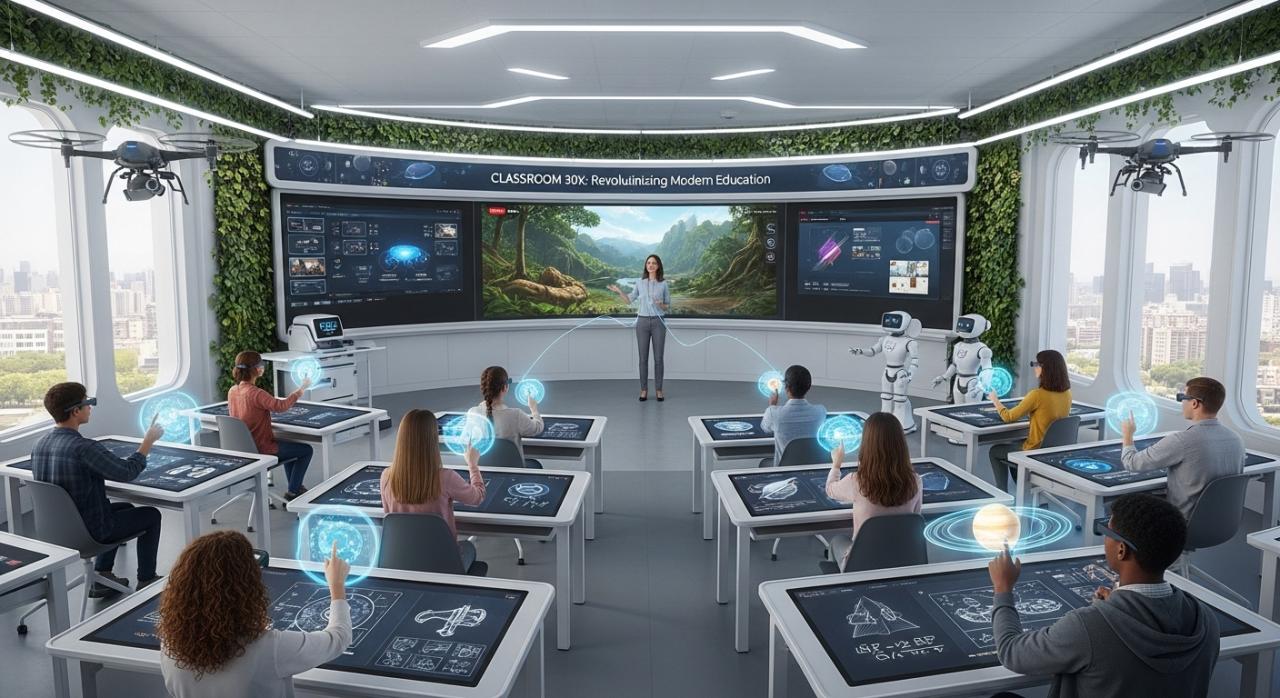
As students work on their devices, the teacher can scan a dashboard that flags exactly who is stuck, what specific concept is causing the block, and how long they have been struggling. This transforms the teacher’s role from a passive proctor into a highly targeted interventionist who can glide across the room to deliver precise, one-on-one support exactly when it is needed most.
B. Asynchronous Pacing Frameworks
In a standard classroom, time is fixed and learning is variable; the teacher spends exactly two weeks on a unit, and students earn highly variable grades at the end. Adaptive environments invert this paradigm so that learning is fixed and time is variable. Every student is expected to reach absolute mastery over the core competencies, but the runway they are given to reach that destination expands or contracts based on their individual pace.
Fast learners can accelerate through an entire semester of introductory material in a matter of weeks, unlocking advanced exploratory projects or dual-enrollment content. Concurrently, students who require extra processing time can slow down, repeating interactive simulations and receiving alternative explanations without slowing down their peers or feeling the stigma of public remediation.
C. Multimodal Content Diversification
Learners do not merely differ in the speed at which they process information; they vary significantly in how they respond to different presentation formats. Advanced adaptive systems actively vary the structural presentation of content based on engagement metrics.
If a student shows signs of cognitive fatigue or low retention when reading dense blocks of text about cellular biology, the platform automatically pivots. It might present a short, high-fidelity narrative video, launch an interactive drag-and-drop 3D model of a cell, or gamify the concept through a digital simulation. This fluid adaptation ensures that linguistic barriers or decoding difficulties do not block a student’s capacity to master complex scientific or historical concepts.
Pedagogical Benefits Driving Institutional Adoption
The widespread transition toward adaptive learning ecosystems is validated by measurable, empirical improvements in student achievement, psychological well-being, and institutional efficiency. By addressing the deep-seated flaws of one-size-fits-all instruction, these platforms yield widespread structural benefits across the academic spectrum.
| Traditional Classroom Models | Modern Adaptive Technology Classrooms |
| Uniform pacing dictated by a rigid calendar schedule. | Fluid, variable pacing adjusted to individual student mastery. |
| Remediation occurs after summative assessment failure. | Intervention occurs immediately mid-lesson via algorithmic adjustments. |
| Teachers spend significant hours on manual grading tasks. | Automated grading and immediate cognitive data updates. |
| Static textbook materials with fixed text and images. | Dynamic, multimodal digital assets that adjust layout and style. |
A. Eradication of Systemic Learning Gaps
The most urgent crisis in modern global education is the accumulation of hidden learning gaps. When a student receives a C grade in fourth-grade mathematics, it means they missed 20% of the foundational concepts. When they move on to fifth-grade math, the new curriculum assumes 100% mastery. This forces the student to build advanced skills on top of a crumbling foundation.
Adaptive technology stops this cycle by acting as an automated gatekeeper of mastery. Because the system refuses to advance a student to higher-level concepts until they have proven consistent competence in foundational nodes, learning gaps are diagnosed and repaired long before they can manifest as chronic academic failure.
B. Cultivation of Intrinsic Motivation and Autonomy
Traditional schooling frequently triggers learned helplessness in struggling students and deep disengagement in advanced ones. By constantly adjusting the challenge level to match the user’s current capacity, adaptive platforms create psychological flow states.
Students experience the rewarding sensation of overcoming challenges that are difficult but attainable. This dynamic builds academic resilience, transforming learning from a passive chore into an active, self-directed quest. Students take visible ownership of their learning pathways, tracking their progress across visual mastery maps and developing meta-cognitive awareness of their own strengths and weaknesses.
C. Optimization of Teacher Utility and Well-Being
The administrative burden placed on modern educators is a primary driver of global teacher burnout. Teachers routinely spend dozens of hours every week grading worksheets, organizing diagnostic data, and writing differentiated lesson plans for diverse student groups. Adaptive systems absorb the brunt of this routine computational labor.
By automating diagnostic assessment, daily grading, and routine skills practice, the technology returns hundreds of hours of professional time back to the faculty. This allows teachers to dedicate their unique human talents to high-impact pedagogical activities that algorithms cannot replicate: facilitating deep Socratic discussions, mentoring vulnerable students, conducting hands-on collaborative science labs, and cultivating emotional intelligence.
Implementing Adaptive Technology: A Strategic Guide
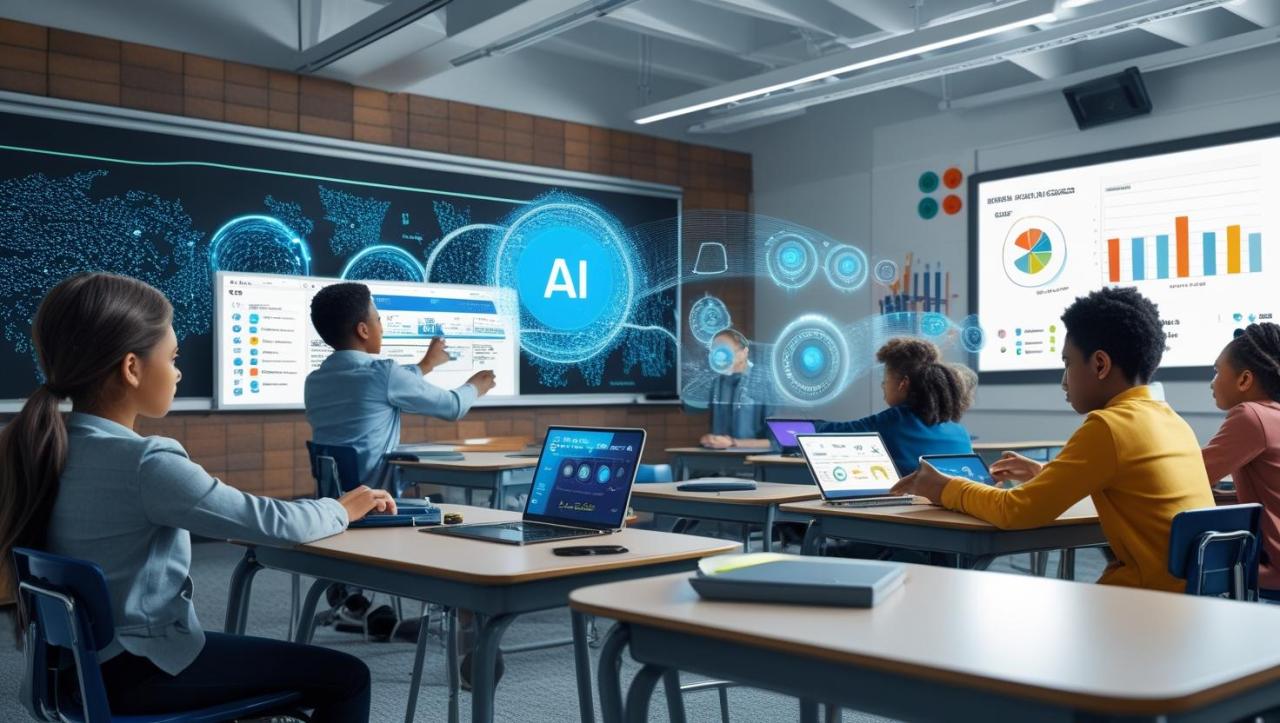
Migrating an educational institution from a conventional textbook framework to an adaptive technological ecosystem requires careful design and planning. Randomly distributing software licenses to students without structural preparation routinely results in low engagement and wasted budgets. Successful implementation follows a distinct, chronological sequence:
Overcoming Structural Barriers and Challenges
Despite the clear benefits, implementing adaptive systems across global school districts presents real structural challenges. Educational leaders must anticipate these obstacles and deploy proactive design strategies to mitigate them.
A. The Digital Divide and Equity Anomalies: While adaptive software can democratize access to elite instruction, it can inadvertently widen equity gaps if students lack internet access at home. If an adaptive platform requires continuous connectivity for homework assignments, students from lower socioeconomic backgrounds face immediate disadvantages. Districts must resolve this by investing in cellular hotspots, building offline functional modes into their software selections, and extending school library operating hours.
B. Data Privacy and Regulatory Compliance: Because adaptive learning engines thrive on massive, granular streams of behavioral and personal data, they represent highly sensitive targets for cyber threats. Educational institutions must ensure that any vendor partnership adheres strictly to data privacy frameworks, such as COPPA (Children’s Online Privacy Protection Act) and GDPR guidelines. All data must be encrypted in transit and at rest, student profiles must remain anonymized, and corporate vendors must be legally barred from monetizing student behavioral metrics for advertising.
C. The Pitfall of Software Over-Reliance: A critical risk in tech-heavy classrooms is the erosion of human community. If school administrations allow adaptive software to dominate the entire school day, classrooms risk devolving into quiet, sterile rows of children staring silently into glowing screens. Adaptive tools must always be framed as an augmentative resource, not a teacher replacement. The goal of technology is to handle routine mechanics swiftly so that human interaction, collaborative debate, and community problem-solving can take center stage.
The Next Frontier: The Evolution of Intelligent Classrooms
Looking ahead, the capabilities of adaptive learning platforms will expand dramatically. As large language models and generative AI mature, the next generation of adaptive tech will move beyond pre-authored multiple-choice paths. Future classrooms will feature conversational AI tutors that engage students in spoken dialogue, assessing verbal reasoning and generating custom illustrations on the fly to match a student’s personal interests.
Furthermore, biophysical feedback integration—such as gaze-tracking systems built into educational devices—will soon allow platforms to detect micro-expressions of confusion or physical fatigue before the student even inputs a wrong answer. By constantly refining its delivery to match human cognitive limits, intelligent software promises to make high-quality, customized education scalable worldwide.
Ultimately, adaptive learning technology does not aim to engineer a hyper-mechanized, cold classroom environment. Instead, it leverages sophisticated software to unlock the full potential of human connection. By offloading routine cognitive drilling to algorithms, it frees educators to do what they do best: inspire, mentor, and guide.
As institutions navigate this transition, embracing these responsive technologies ensures that schools shift away from sorting students by arbitrary age brackets. Instead, they can become true centers of personalized human growth, preparing every unique learner to thrive in an increasingly complex world.