The global healthcare ecosystem is experiencing an unprecedented structural transformation. For decades, clinical frameworks operated on a reactive paradigm: a patient experiences symptoms, undergoes diagnostic tests, and receives a treatment plan based on established medical protocols. However, this traditional methodology is increasingly strained by ballooning patient volumes, systemic administrative burdens, and the human margin of error inherent in fast-paced clinical environments.
Enter the era of intelligent medicine. Artificial Intelligence (AI) diagnostics is no longer a futuristic laboratory concept or a back-office experiment. It is an active, scalable computational infrastructure that is fundamentally solving some of the most deeply entrenched crises in modern healthcare. By processing massive datasets, uncovering microscopic bio-patterns, and streamlining clinical workflows, machine learning algorithms are converting reactive medical frameworks into highly precise, proactive, and predictive operations.
From analyzing complex radiological imaging to decoding dense genomic variations, automated diagnostic models are establishing a new baseline for patient care. This comprehensive analysis explores the mechanisms, clinical applications, economic impacts, ethical parameters, and future trajectories of the artificial intelligence revolution within medical diagnostics.
1. The Core Technological Pillars of Automated Medicine
To fully comprehend how machine learning solves systemic medical vulnerabilities, it is essential to explore the underlying technologies driving these diagnostic engines. Modern health-focused AI does not rely on a singular software model. Instead, it leverages a sophisticated matrix of distinct computational branches, each tailored to process specific formats of clinical data.
A. Deep Learning and Convolutional Neural Networks (CNNs)
Computer vision forms the bedrock of modern digital radiology and pathology. Deep learning structures, particularly Convolutional Neural Networks (CNNs), are highly specialized at parsing structural visual information. When presented with a digital medical image, a CNN systematically breaks down the pixel matrix into distinct layers, analyzing edge orientations, tissue density contrasts, and anomalous spatial patterns that might escape standard human observation. These networks are trained on millions of historical, anonymized patient scans, allowing them to classify pathological anomalies with precision levels that rival or exceed board-certified specialists.
B. Natural Language Processing (NLP) for Clinical Documentation
A significant portion of critical patient data remains locked away within unstructured formats, such as handwritten physician notes, long-form electronic health records (EHRs), and legacy discharge summaries. Natural Language Processing (NLP) serves as the linguistic bridge that reads, comprehends, and categorizes these textual narratives. By extracting relevant data points—such as historical familial risk factors, subtle historical symptom progressions, and cross-disciplinary medication reactions—NLP engines construct a comprehensive, contextual clinical profile for every individual patient.
C. Multimodal Foundation Models and Agentic AI
The latest evolution in medical software involves multimodal foundation models capable of synthesizing completely different data types simultaneously. Rather than reviewing an X-ray in a vacuum, these advanced clinical architectures evaluate the patient’s imaging files, real-time blood lab assays, genetic markers, and historical EHR data concurrently. Furthermore, the deployment of agentic AI systems—proactive, goal-driven digital assistants enables continuous, dynamic surveillance of patient trajectories, serving as an intelligent, hybrid workforce alongside human practitioners.
2. Mainstream Clinical Applications Driving the Transformation
The integration of artificial intelligence into clinical pipelines has crossed the mainstream threshold, delivering tangible improvements across a vast spectrum of specialized medical practices.
A. Advanced Radiology and Image Triage
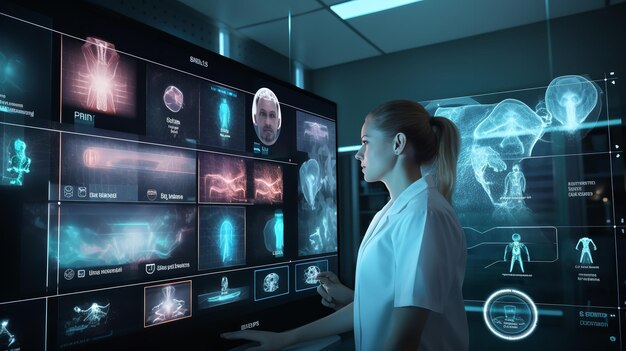
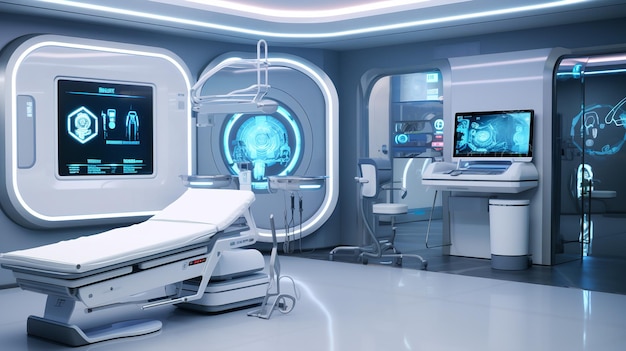
Radiology represents the most mature operational application of medical machine learning. In standard hospital environments, radiologists frequently battle heavy case backlogs, which can lead to delayed intervention for critical, time-sensitive anomalies. AI triage systems solve this by working ahead of the standard queue. As soon as a CT scan, MRI, or X-ray is completed, the algorithm instantly scans the file for acute emergencies like pulmonary embolisms, intracranial hemorrhages, or aortic dissections. If an acute abnormality is identified, the system instantly escalates the scan to the top of the physician’s worklist, compressing triage timelines by significant margins.
B. Computational Pathology and Early Oncology Detection
Biopsy slide analysis has historically been a meticulous, time-consuming manual process prone to subjective interpretation variations. Computational pathology platforms digitize these tissue slides and apply deep learning algorithms to isolate micro-clusters of malignant cells with high precision and reproducibility. In oncology, early detection remains the single greatest factor influencing survival rates. AI models can recognize cellular architectural distortions and early-stage cancer biomarkers that are virtually indistinguishable to the human eye, enabling oncologists to catch aggressive tumors long before they metastasize.
C. Cardiovascular Risk Prediction via Electrocardiograms
Cardiovascular diseases are a leading cause of global mortality, yet many high-risk patients remain asymptomatic until a major cardiac event occurs. By training machine learning models on massive repositories of standard electrocardiogram (ECG) data, researchers have developed diagnostic tools that identify microscopic electrical fluctuations. These hidden waveforms can indicate underlying structural heart defects, asymptomatic arrhythmias, or elevated long-term risks for heart failure, allowing preventative interventions to begin years in advance.
D. Precision Ophthalmology and Retinal Screenings
The human retina provides a clear, non-invasive view of the body’s microvascular system. Specialized AI screening platforms can rapidly evaluate high-resolution fundus photographs to identify early indicators of diabetic retinopathy, age-related macular degeneration, and glaucoma. Because these automated screening systems can operate effectively on portable, low-cost cameras, they can be deployed within local primary care clinics or remote communities, preventing irreversible blindness in populations that lack immediate access to dedicated ophthalmology specialists.
3. Resolving the Critical Crisis of Diagnostic Errors
Diagnostic errors represent a significant, yet historically unaddressed crisis within global healthcare systems. Millions of patients worldwide experience adverse outcomes, extended hospitalizations, or permanent injuries due to delayed, inaccurate, or completely missed diagnoses. The implementation of AI diagnostics targets the root causes of these clinical failures.
+-------------------------------------------------------------+
|              TRADITIONAL DIAGNOSTIC PIPELINE                |
|  [Symptom Presentation] -> [Delayed Testing] -> [Error Risk]|
+-------------------------------------------------------------+
                              vs.
+-------------------------------------------------------------+
|                  AI-POWERED DIAGNOSTIC FLOW                 |
|  [Continuous Triage] -> [Instant Pattern Matching] -> [Safe]|
+-------------------------------------------------------------+
A. Mitigating Cognitive Fatigue and Biases
Human clinicians are susceptible to physical exhaustion, cognitive fatigue, and various forms of psychological biases during long, high-stress shifts. For example, anchoring bias can cause a doctor to fixate prematurely on an initial diagnosis, ignoring subsequent signs of an alternative illness. Similarly, satisfaction of search occurs when a practitioner stops looking for additional medical conditions after finding a single obvious problem. In contrast, computational algorithms maintain uniform analytical consistency regardless of volume, meticulously screening every single pixel, data point, and laboratory variable without fatigue.
B. Standardizing Diagnostic Quality Across Geographies
The quality of a patient’s medical care is often determined by their geographic proximity to elite tertiary teaching hospitals. Patients living in rural areas or underfunded regions frequently face a shortage of experienced medical specialists. Integrating validated AI diagnostic software into regional community clinics helps level this playing field. It provides local general practitioners with real-time access to clinical decision support capabilities that reflect global medical expertise, ensuring that high-standard diagnostic evaluations are accessible regardless of geography.
4. Operational and Economic Impacts on Healthcare Delivery
Beyond directly improving clinical outcomes, the integration of automation into medicine delivers far-reaching operational and economic benefits to overextended healthcare systems.
| Operational Metric | Traditional Process Framework | AI-Enhanced Diagnostics Model |
| Imaging Triage Speed | Standard worklist order queue (hours) | Instant automated escalation (seconds) |
| Data Synchronization | Manual review of separate reports | Consolidated multimodal synthesis |
| Administrative Load | High volume of clinical documentation | Automated workflow generation |
| Preventative Efficacy | Reactive symptom management | Proactive longitudinal tracking |
A. Reducing Burnout by Streamlining Administrative Tasks
Modern physicians spend a disproportionate amount of their working hours completing paperwork, mapping billing codes, and navigating complex user interfaces within electronic health record systems. This administrative burden is a primary driver of professional burnout among healthcare workers. Generative AI tools and specialized clinical language models can automatically synthesize diagnostic evidence, compile detailed patient summaries, and pre-populate complex medical documentation. By automating these repetitive, manual tasks, technology allows clinical teams to step away from computer screens and devote their focus to direct, empathetic patient interactions.
B. Optimizing Hospital Resource Allocation
When a hospital operates without automated triage tools, emergency departments can quickly become bottlenecks as staff wait for diagnostic interpretations. AI-driven prioritization systems streamline this process, allowing rapid patient sorting and faster discharge or admission decisions. By accelerating these workflows, medical facilities can maximize the utility of expensive imaging infrastructure, reduce average hospital lengths of stay, and optimize bed utilization rates across busy departments.
C. Shifting Toward Lower-Cost Preventative Care Models
Treating advanced, late-stage chronic illnesses and metastatic cancers places an immense financial strain on public and private health economies. By shifting the clinical focus from reactive management to early, proactive intervention, automated diagnostic models can help mitigate these high costs. Catching a condition like renal failure or cardiovascular disease during its initial stages allows clinicians to implement lower-cost, highly effective lifestyle modifications and targeted therapies, preventing expensive emergency interventions and long-term hospital stays down the road.
5. Navigating Ethical Frameworks, Bias, and Implementation Obstacles
While the potential of automated diagnostics is vast, its widespread clinical integration introduces a complex set of operational challenges, ethical questions, and data governance requirements that must be carefully managed.
A. Eliminating Algorithmic Biases within Training Data
An AI algorithm is only as balanced and comprehensive as the dataset used to train it. If a diagnostic model is built primarily on clinical data collected from affluent, urban populations, it may exhibit reduced diagnostic accuracy when applied to patients from different ethnic, socioeconomic, or geographic backgrounds. To prevent the entrenchment of these health disparities, data science teams must ensure training sets are diverse and representative of global population dynamics.
B. Overcoming the “Black Box” Problem with Explainable AI (XAI)
Many deep learning architectures are highly complex, meaning their internal decision-making paths are difficult for humans to trace directly. This lack of transparency creates the “black box” dilemma. For a physician to confidently act on a significant machine-generated recommendation—such as changing a treatment plan or proceeding to an invasive biopsy—they must understand the underlying clinical reasoning. The medical industry is addressing this by prioritizing Explainable AI (XAI) frameworks. These specialized models use visual heatmaps and feature-weighting summaries to show doctors exactly which parts of a scan or dataset triggered the diagnostic conclusion, maintaining clarity and clinical accountability.
C. Maintaining Data Privacy and Regulatory Compliance
Medical information is deeply personal and highly protected by international legal frameworks, such as HIPAA in the United States and GDPR in Europe. Deploying cloud-based diagnostic tools requires strict data privacy measures, advanced encryption protocols, and secure access management controls. Furthermore, developing standardized verification methods for continuous learning models remains an operational challenge for regulatory bodies like the FDA, as these systems frequently adapt and update their algorithms based on new streams of real-world patient data.
6. The Next Frontier: Decentralized Diagnostics and Longevity
Looking toward the future, the integration of clinical machine learning is moving beyond traditional hospital walls and expanding directly into the daily lives of patients around the world.
+-----------------------------------+
|     DECENTRALIZED HEALTH ECOSYSTEM |
|                                   |
|   [Wearable Biosensors]           |
|            │ (Real-time tracking) |
|            ▼                    |
|   [Edge AI Diagnostic Engine]     |
|            │ (Pre-emptive alert)  |
|            ▼                    |
|   [Targeted Medical Care]         |
+-----------------------------------+

A. Longitudinal Remote Patient Monitoring via Wearables
The next generation of consumer health wearables and medical-grade bio-sensors can track a continuous stream of physiological metrics, including blood oxygen levels, heart rate variability, skin temperature, and sleep cycles. Advanced edge-computing AI models can analyze these longitudinal data streams in real time. Rather than relying on occasional, isolated hospital visits, patients receive continuous, preventative health monitoring. The system can flag subtle, negative trends in a user’s health metrics and advise them to seek a medical evaluation before an acute clinical episode develops.
B. Genomic Synthesis and Personalized Longevity Therapeutics
As the cost of full genomic sequencing continues to fall, AI platforms are playing a vital role in decoding the immense complexity of the human genome. By cross-referencing an individual’s unique genetic profile with expansive global research databases, these tools allow medical teams to design highly personalized longevity strategies. This integration enables precision prescribing, helps avoid dangerous adverse drug reactions, and allows for preventative treatments tailored precisely to the patient’s unique genetic predispositions.
C. The Paradigm Shift Toward True Healthcare
For generations, modern medicine has functioned largely as a “sickcare” system, focused on treating illnesses after they cause physical harm. The mature integration of automated diagnostics shifts this model toward true, proactive healthcare. By offering accessible screenings, reducing the rate of diagnostic errors, and identifying underlying health conditions long before symptoms appear, intelligent machines are helping build a more sustainable, equitable, and effective medical ecosystem for the future.