
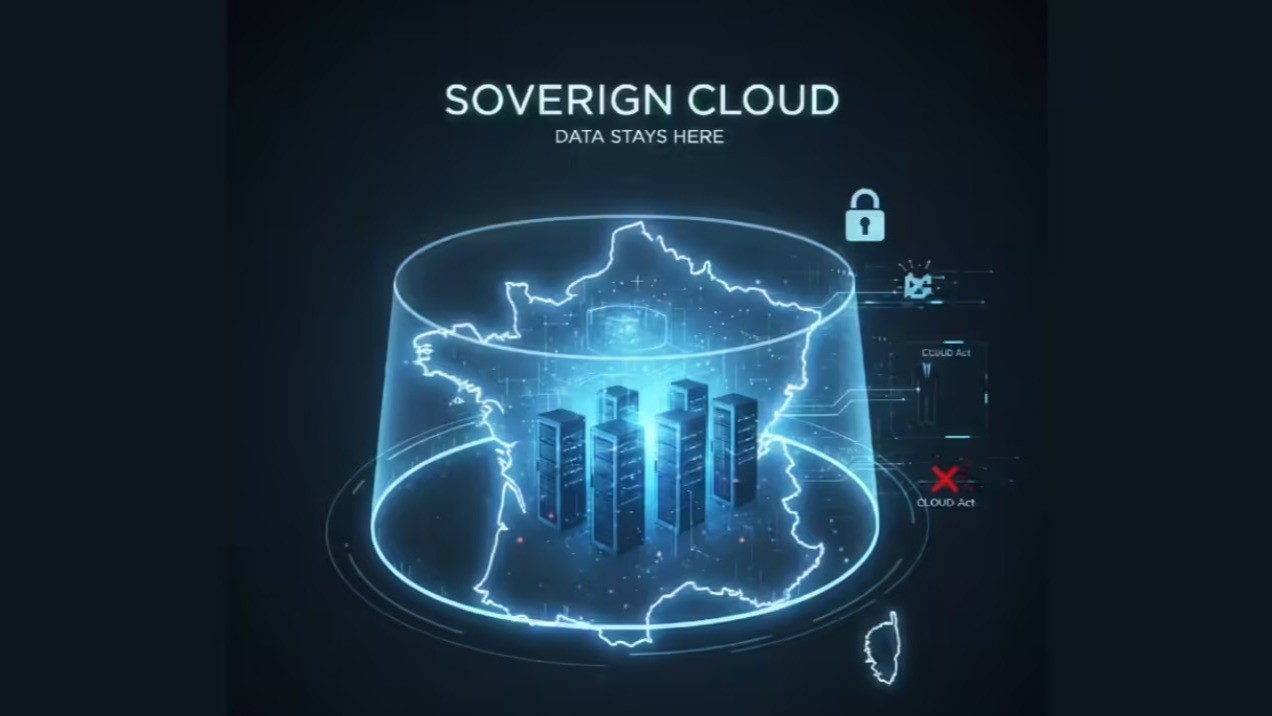
The global cloud computing industry is undergoing a massive paradigm shift. For over a decade, businesses and government agencies relied heavily on centralized global hyperscalers to manage, process, and store their digital assets. While this centralized public cloud model offered unmatched scalability and rapid innovation, it introduced significant vulnerabilities regarding data residency, unauthorized foreign access, and complex jurisdictional overlapping.
As geopolitical tensions rise and international data privacy regulations tighten, the concept of digital autonomy has shifted from a theoretical luxury into an absolute strategic mandate. Organizations are discovering that keeping data within physical borders is no longer sufficient. True digital resilience requires complete authority over the entire technology stack encompassing the physical infrastructure, operational workflows, software applications, and data handling protocols.
This operational reality has fueled the rapid emergence of Sovereign Cloud Frameworks. According to market insights from Gartner, global spending on sovereign cloud Infrastructure as a Service (IaaS) is projected to reach $80 billion, representing a significant 35.6% increase within a single fiscal year. This massive capital reallocation demonstrates that enterprise workloads are systematically migrating away from traditional public clouds toward highly controlled, localized environments. A sovereign cloud framework serves as the structural blueprint that enables entities to harness modern cloud efficiency while maintaining total legislative and physical control over their information assets.
Core Pillars Defining Modern Sovereignty Frameworks
A comprehensive sovereign cloud architecture cannot rely solely on a single defensive tool or regional data center. To build an impenetrable framework that meets modern regulatory standards, an organization must implement a multi-layered security and operational model. Leading technology strategists break down a robust sovereign cloud deployment into four essential, foundational pillars:
+-------------------------------------------------------------------+
|                     CROSS-STACK SECURITY LAYER                     |
+---------------------------------+---------------------------------+
|     OPERATIONAL SOVEREIGNTY     |        DATA SOVEREIGNTY         |
+---------------------------------+---------------------------------+
|      SOFTWARE AUTONOMY          |     INFRASTRUCTURE CONTROL      |
+---------------------------------+---------------------------------+
A. Strict Data Sovereignty and Metadata Management
Data sovereignty requires that all customer information be stored, processed, and managed exclusively within the legal boundaries of the host nation or region. This pillar ensures that foreign courts, intelligence services, or external corporate entities cannot legally compel the cloud provider to surrender sensitive data blocks.
However, modern data sovereignty extends far beyond primary operational databases. It explicitly encompasses metadata, including:
-
System logs and network traffic metrics
-
Automated performance analytics
-
Technical support tickets and internal communications
-
User identity directories and access control lists
Because metadata can reveal complex operational patterns, system vulnerabilities, and user behaviors, advanced frameworks treat it with the same high-security protocols applied to core application data. This involves zero-knowledge end-to-end encryption, localized key management systems, and strictly isolated database architectures.
B. Comprehensive Operational Sovereignty
Operational sovereignty governs the human element of cloud management. It establishes strict protocols determining exactly who can access, maintain, configure, and troubleshoot the cloud infrastructure.
Under a strict sovereign framework, all administrative and technical support duties must be executed exclusively by local, in-country personnel who possess verified citizenship and the necessary government security clearances. This completely prevents a foreign engineer employed by a global provider from accessing the environment during a maintenance window or troubleshooting session, ensuring operational processes remain fully insulated from external interference.
C. Software Autonomy and Open-Source Integration
Relying entirely on proprietary, closed-source enterprise software introduces a significant risk of vendor lock-in and potential geopolitical vulnerability. Software autonomy demands that organizations have full visibility into the source code powering their cloud operating systems, hypervisors, and automation pipelines.

Modern sovereign cloud architectures heavily prioritize open-source components. This approach ensures that if an international software vendor faces trade restrictions, introduces hidden telemetry, or ceases operations, the host nation can independently maintain, patch, and expand its cloud ecosystem without external reliance.
D. absolute Infrastructure Control and Ownership
The bottom layer of the sovereign stack demands physical and logical security over the actual hardware assets. This means the data centers, servers, storage arrays, and networking switches must be owned, leased, or directly controlled by domestic entities.
Physical infrastructure control eliminates the risk of a foreign provider executing a remote “kill switch” to abruptly disable localized digital systems. Furthermore, it requires strict multi-tenant isolation, ensuring that public sector data or critical national infrastructure workloads are completely segregated from commercial commodity applications.
Global Regulatory Drivers and Standardization
The shift toward sovereign cloud frameworks is accelerated by stringent regulatory frameworks enacted by major economic regions. Governments are moving away from voluntary guidelines, establishing enforceable legal standards that penalize organizations failing to secure their digital borders.
A. The European Landscape: NIS2, DORA, and CADA
Europe remains at the forefront of digital sovereignty legislation. The implementation of the Network and Information Security Directive (NIS2) and the Digital Operational Resilience Act (DORA) has forced enterprises and financial institutions to secure their supply chains and guarantee operational uptime against external disruption.
The regulatory landscape expanded further with the introduction of the proposed EU Cloud and AI Development Act (CADA). CADA codifies an explicit four-level assurance framework designed to govern how cloud services are delivered to public sector entities and highly regulated industries:
[SEAL-1: Jurisdictional Sovereignty] -> Low exposure to foreign legal claims
                  │
[SEAL-2: Data Sovereignty] ----------> Enhanced data residency & isolation
                  │
[SEAL-3: Technological Autonomy] ----> EU ownership & citizen-only operations
                  │
[SEAL-4: Full Sovereignty] ----------> Total open-source control & zero external dependencies
This structured approach forces organizations to accurately map their software stack against specific Sovereignty Effectiveness Assurance Levels (SEAL). A higher SEAL rating ensures stronger protection against extraterritorial judicial mandates, such as the US CLOUD Act.
B. Global Adoption: Middle East, Africa, and Asia-Pacific
While Europe drives early standardization, the highest growth rates in sovereign cloud spending are occurring across the Middle East, Africa, and the mature Asia-Pacific regions.
Nations in these regions are actively constructing domestic cloud frameworks to protect national security data, support local AI development, and foster economic resilience. By establishing localized cloud zones, these countries reduce their reliance on Western hyperscalers, ensuring their critical infrastructure remains stable during global geopolitical friction.
Architectural Implementation: The Technical Path to Compliance
Building or adopting a future sovereign cloud framework requires a methodical, step-by-step approach to technical architecture. Organizations must carefully balance cloud agility with rigorous compliance mandates.
The implementation process requires a structured sequence to ensure no gaps are left in the data security fabric:
The Strategic Dilemma: Building vs. Buying in Modern Environments
As enterprises plan their long-term digital strategies, they face a critical decision: should they invest capital to build a private, custom sovereign cloud infrastructure, or purchase a pre-configured solution from an established commercial provider? This choice carries significant financial and operational implications.
| Strategic Criteria | Building an In-House Sovereign Cloud | Buying a Commercial Sovereign Solution |
| Capital Investment | Extremely high initial costs for data centers, hardware procurement, and engineering talent. | Predictable, subscription-based operating expenses with minimal upfront hardware fees. |
| Operational Control | Complete, uncompromised control over the entire software stack, hardware layers, and operational staff. | Dependent on the vendor’s underlying management systems, features, and platform capabilities. |
| Time to Market | Slower implementation due to lengthy procurement, construction, and certification timelines. | Rapid deployment using pre-existing infrastructure and pre-certified compliance templates. |
| Vendor Dependency | Eliminates vendor lock-in; ensures long-term economic value remains within the local jurisdiction. | Risk of technical dependency; requires thorough data portability planning to mitigate risks. |
| Compliance Certainty | Custom-engineered to meet specific regional requirements up to the highest levels like SEAL-4. | Relies on vendor compliance assertions; requires continuous auditing of the provider’s supply chain. |
Organizations handling highly sensitive government data, national defense applications, or critical public utilities typically favor the Building model to ensure complete data control and prevent any external vulnerabilities. Conversely, commercial enterprises managing standard workloads often find the Buying model more efficient, allowing them to balance operational agility with regional compliance mandates.
Technical Challenges and the Hyperscaler Coexistence Strategy
Transitioning to a sovereign cloud framework introduces several engineering challenges. The most significant obstacle is the persistent feature gap between localized sovereign clouds and massive global public clouds. Over the past decade, global hyperscalers have invested billions of dollars developing advanced ecosystems that integrate serverless computing architectures, managed Kubernetes engines, real-time data streaming analytics, and cutting-edge artificial intelligence pipelines.
Localized sovereign cloud environments often struggle to replicate this broad array of managed services on day one. Consequently, organizations face a difficult choice: accept reduced software capabilities to maintain strict compliance, or risk regulatory penalties by using non-sovereign infrastructures for AI training and large-scale data processing.
To address this challenge, leading enterprise architects are moving toward a Coexistence Strategy. Instead of completely abandoning public clouds, they deploy a hybrid, multi-cloud model:
+-------------------------------------------------------------------+
|                     HYBRID MULTI-CLOUD MODEL                      |
+-------------------------------------------------------------------+
|  SOVEREIGN REGIONAL CLOUD ZONE   │     GLOBAL PUBLIC HYPERSCALER     |
|  ─────────────────────────────   │     ─────────────────────────     |
|  * Sensitive Customer Data       │     * Commodity Web Applications  |
|  * Labeled National Datasets     │     * Non-Sensitive Dev/Test Labs |
|  * Core Financial Transact Logs  │     * Anonymized Scale Processing |
|  * SEAL-4 Regulated Processes    │     * Scalable Global UI/UX       |
+----------------------------------┴--------------------------------+
Under this hybrid architectural approach, highly sensitive data, core customer transactions, and strictly regulated processes remain isolated inside the sovereign cloud zone. Meanwhile, non-sensitive applications, testing environments, and anonymized datasets use global public cloud infrastructure to optimize computing performance and manage costs.
To make this hybrid strategy successful, organizations must implement robust edge computing technologies, real-time data anonymization tools, and highly interoperable open-source frameworks to prevent data leakage during multi-cloud operations.

Future Horizons: The Impact of Sovereign AI on Cloud Frameworks
As we look toward the future of enterprise technology, the evolution of sovereign cloud frameworks is becoming deeply intertwined with the rise of artificial intelligence. Large language models (LLMs) and advanced neural networks require massive volumes of data for effective training and real-time inference. When an organization utilizes a public, non-sovereign cloud platform to train its proprietary AI systems, it frequently transmits sensitive corporate intelligence, user interactions, or protected national datasets across international borders, creating serious data privacy risks.
This exposure has sparked a growing global demand for Sovereign AI. Modern frameworks are expanding to include specialized, high-performance computing clusters equipped with localized graphics processing units (GPUs) dedicated entirely to secure AI model development. These dedicated environments ensure that:
-
Core training datasets never leave the host country’s physical boundaries or legal jurisdiction.
-
Proprietary algorithms and fine-tuning configurations remain protected from foreign industrial espionage.
-
AI-driven decision-making systems comply with regional consumer privacy laws and ethical data directives.
Furthermore, future sovereign frameworks are incorporating automated governance layers driven by AI itself. These intelligent compliance engines continuously monitor internal network configurations, automatically audit system administrator access patterns, and seamlessly verify the integrity of open-source software supply chains. By embedding compliance directly into the automated infrastructure layer, future sovereign clouds will dynamically defend themselves against zero-day vulnerabilities and extraterritorial regulatory changes, providing a secure foundation for the next generation of global enterprise innovation.
Conclusion: Securing the Digital Frontier
Sovereign cloud frameworks represent a necessary evolution in the global digital economy, shifting from a niche compliance requirement into a standard pillar of modern enterprise architecture. By establishing clear structures around data residency, operational workflows, software transparency, and physical hardware control, these frameworks give organizations the tools to operate confidently in an increasingly fractured geopolitical landscape.
Whether an organization chooses to build a custom private infrastructure or leverage specialized regional cloud providers, prioritizing digital sovereignty early is essential. Embracing these open, highly secure, and legally insulated architectures allows modern enterprises to protect customer trust, safeguard national security interests, and build resilient systems capable of navigating the future digital frontier.