

The dawn of the 21st century promised a hyper-connected world, yet vast swathes of our planet remain in digital darkness. This stark reality is now being challenged not from the ground, but from the heavens. A monumental shift is underway, spearheaded by the global launch of space-based internet constellations. This isn’t a singular event but an ongoing technological revolution, where private enterprises and nations are deploying thousands of satellites to form a web of connectivity encircling the Earth. This article delves deep into the mechanics, key players, profound implications, and future trajectory of this ambitious endeavor to blanket the globe in high-speed, low-latency internet.
For decades, internet access has been tethered to terrestrial infrastructure fiber-optic cables, cell towers, and copper lines. These technologies, while effective, come with inherent limitations of geography and economics. Laying cable across oceans, mountains, and remote regions is prohibitively expensive and logistically daunting. Consequently, nearly three billion people lack reliable internet access, creating a pervasive “digital divide” that stifles education, economic opportunity, and access to information. Traditional geostationary (GEO) satellites, positioned at about 35,786 kilometers, have offered a solution but a flawed one, plagued by high latency (signal delay) and limited bandwidth, making them unsuitable for modern, real-time applications like video conferencing, online gaming, and telemedicine.
The breakthrough enabling today’s space internet revolution is the move from GEO to Low Earth Orbit (LEO). By positioning satellites at altitudes between 350 and 1,200 kilometers, companies can drastically reduce signal travel time. However, because LEO satellites move rapidly relative to the Earth’s surface, a single satellite cannot provide continuous coverage. The solution is a constellation: a synchronized network of hundreds or thousands of satellites working in concert. As one satellite passes beyond the horizon, another seamlessly takes over, maintaining a constant connection. This requires unprecedented advancements in satellite miniaturization, affordable launch capabilities (via reusable rockets), and sophisticated ground-based phased-array antennas that can electronically track satellites across the sky without moving parts.
The race to build these mega-constellations is led by a few formidable players, each with distinct strategies and scales.
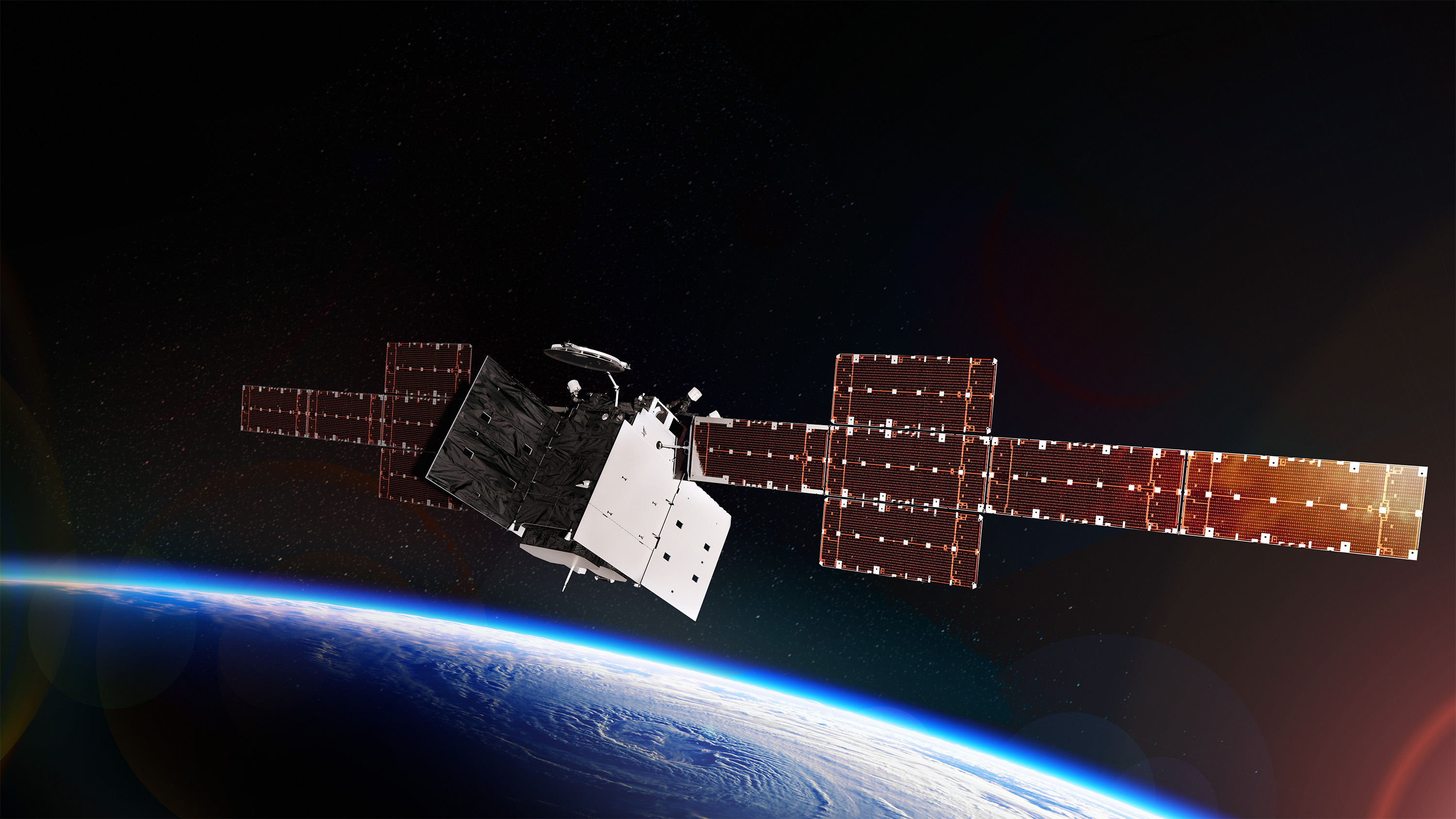
A. SpaceX’s Starlink: Currently the most advanced and publicly accessible constellation, Starlink has already launched over 5,000 satellites. Its first-mover advantage is significant. SpaceX leverages its own Falcon 9 rockets for frequent, cost-effective launches. The user terminal, dubbed “Dishy McFlatface,” is a key innovation, automatically aligning with overhead satellites. Starlink is already offering service across continents, targeting rural homeowners, maritime vessels, airlines, and even providing critical support in disaster zones and conflict areas.
B. OneWeb: Taking a more focused approach, OneWeb (backed by entities like the UK Government, Bharti Global, and Eutelsat) is building a constellation of around 650 satellites. Its primary market is not direct-to-consumer but Business-to-Business (B2B) and Government-to-Government (G2G). OneWeb aims to serve telecommunications companies, internet service providers (ISPs), maritime and aviation industries, and governments, enabling them to extend their own networks to remote areas.
C. Amazon’s Project Kuiper: The looming giant in the race, Project Kuiper has FCC approval to deploy 3,236 satellites. While yet to launch its production satellites, Amazon’s immense resources, cloud computing expertise via AWS, and global logistics network position it as a potent competitor. Amazon envisions tight integration with its ecosystem, potentially offering bundled services and targeting enterprise cloud connectivity on a global scale.
D. Other Contenders: China has outlined its own national projects, like GuoWang, and companies like Telesat (with its Lightspeed constellation) are also advancing, ensuring a multi-polar competitive landscape.
The impact of ubiquitous, space-based internet will be transformative across every sector of society and the global economy.
A. Bridging the Digital Divide: This is the most profound humanitarian and economic promise. Remote villages in Sub-Saharan Africa, indigenous communities in the Amazon, and isolated research stations in Antarctica can gain access to educational resources, global markets for their goods, telemedicine, and digital government services. It has the potential to be the greatest equalizer of opportunity since the advent of electricity.
B. Revolutionizing Industries: The implications for transportation are vast. The aviation and maritime industries will transition from expensive, spotty connectivity to seamless, high-speed internet across all flight paths and shipping routes, enhancing operational efficiency and passenger experience. The Internet of Things (IoT) will achieve true global scale, enabling real-time monitoring of environmental sensors, agricultural equipment, and infrastructure anywhere on Earth.
C. Enhancing Redundancy and Security: For nations and corporations, space-based networks provide a critical backup to vulnerable terrestrial infrastructure. In the event of natural disasters (earthquakes, hurricanes) or cyber-attacks that damage ground networks, satellite internet can maintain essential communications for first responders and government operations, enhancing national resilience.
D. Scientific and Exploratory Advancements: Researchers in field geology, ecology, and climatology will transmit large datasets from any location in real-time. Future lunar and Martian colonies will rely on interplanetary extensions of these communication networks, with LEO constellations serving as a foundational model and testbed.
This ambitious venture is not without significant hurdles and concerns that must be responsibly managed.
A. Space Debris and Collision Risk: The crowding of LEO with thousands of satellites drastically increases the risk of catastrophic collisions, which could generate clouds of debris and trigger a cascading effect known as Kessler Syndrome. Operators are implementing automated collision-avoidance systems, designing satellites for complete atmospheric disposal at end-of-life, and participating in data-sharing initiatives. However, international regulatory frameworks need strengthening to ensure long-term orbital sustainability.
B. Astronomical Interference: The bright trails of satellites, particularly in large numbers, are severely impairing ground-based astronomical observations. They photobomb telescope images and create radio frequency interference. Companies are testing mitigation strategies like sunshades (e.g., Starlink’s DarkSat and VisorSat), but this remains an ongoing negotiation between the scientific community and the satellite industry.
C. Regulatory and Market Challenges: Operating a global network requires navigating a complex patchwork of national regulatory approvals for spectrum use and landing rights. There are also concerns about market consolidation, where a few private entities could control a vital global utility, raising questions about affordability, net neutrality, and data sovereignty.
D. Technical Limitations: While latency is low compared to GEO, it is still higher than pure fiber for long-distance links. Network capacity, while vast, is not infinite; user density in urban areas may lead to congestion, making these systems best suited for underserved and remote regions rather than replacing city fiber.

The launch of global space-based internet is not an end point, but a gateway to a more interconnected future. We are witnessing the construction of the foundational layer for a truly planetary nervous system. The next decade will see several key developments:
The integration of 5G and eventually 6G terrestrial networks with LEO backhaul will create seamless, hybrid networks. Satellites will handle backhaul from remote cell towers, bringing 5G coverage to every inch of the planet. Furthermore, the technology and economics mastered in building Earth constellations will directly enable the next leap: a sustainable communication and logistics infrastructure for the Moon, Mars, and beyond. What begins as global internet will evolve into a solar-system-wide web.
In conclusion, the global launch of space-based internet constellations represents one of the most audacious and impactful infrastructure projects in human history. It transcends mere technological novelty; it is a re-imagination of how our world connects. By weaving a digital net from the stars, we are poised to eradicate the digital divide, empower remote communities, revolutionize global industries, and create a more resilient planetary communication system. The challenges of space traffic, astronomical preservation, and equitable governance are substantial, but the coordinated efforts of engineers, regulators, and the global community can navigate them. We stand at the precipice of a new era, where high-speed connectivity becomes as universal and accessible as the sky above a true democratization of information that will accelerate human progress for generations to come. The constellation race has begun, and its ultimate prize is a connected world.