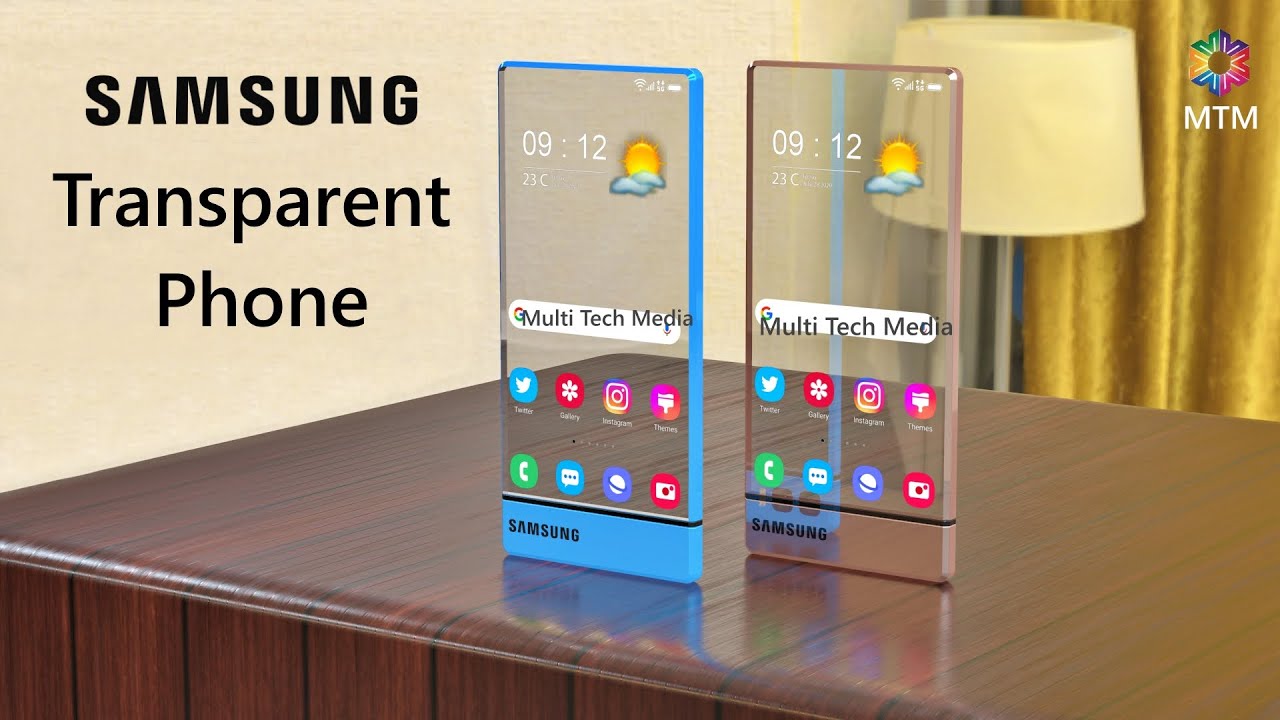
For decades, the concept of a transparent smartphone has been a staple of science fiction, a shimmering symbol of a future just beyond our grasp. From the sleek devices in Minority Report to the holographic interfaces in countless futuristic films, the idea has captivated our collective imagination. Today, that fiction is edging into reality. Leaks, patents, and industry analyst reports have converged, strongly indicating that Samsung, a global titan in consumer electronics, is on the cusp of revealing a working prototype of a transparent phone. This isn’t merely an incremental update; it represents a fundamental reimagining of the mobile device, poised to shatter our perceptions of form, function, and our interaction with the digital world. This deep dive explores the technological marvels behind this potential revelation, its transformative applications, the significant hurdles it must overcome, and its profound implications for the future of personal technology.
A. The Architectural Marvel: Deconstructing the Transparent Display Technology
The heart of this revolutionary device lies in its screen. Achieving true, functional transparency in a smartphone requires a symphony of advanced engineering, moving far beyond current display paradigms.
-
Advanced Transparent OLED (T-OLED) Panels: The cornerstone technology is the evolution of Transparent Organic Light-Emitting Diodes. Unlike traditional LCDs that require a backlight, each pixel in an OLED panel emits its own light. For a transparent version, the substrate (base layer), cathode, and anode are all made from transparent materials like glass or specialized clear plastics. Samsung, a leader in OLED manufacturing, is believed to be utilizing ultra-thin, high-efficiency phosphorescent OLED materials. The key challenge is maintaining high brightness, color accuracy, and longevity while maximizing light transmission through the panel. Recent breakthroughs in patterned transparent conductive oxides (TCOs) and microscopic wiring layouts allow for the necessary electrical pathways without severely obstructing the view.
-
The Camera and Sensor Conundrum: One of the most significant engineering puzzles is the placement of essential components that are inherently opaque. Cameras, image sensors, processors, and batteries cannot yet be made transparent. Samsung’s likely solution is a masterclass in minimalist industrial design. Imagine extremely compact, high-performance modules strategically housed within the slim bezel or frame of the device. Alternatively, these components could be consolidated into a single, elegantly designed opaque bar along one edge of the phone, functioning as a structural element while housing the tech guts. For front-facing cameras, under-display camera (UDC) technology would be essential, placing the sensor beneath the transparent display area and using sophisticated algorithms to clear the image.
-
Power and Processing: The Invisible Engine: The battery represents a major hurdle. While fully transparent batteries with significant capacity are still in lab stages, Samsung may opt for two strategies. The first is a distributed battery system: using multiple, very thin lithium-polymer cells arranged around the perimeter or in that dedicated opaque section, maximizing space efficiency. The second, more futuristic approach could involve transparent graphene-based supercapacitors, though these are likely for later iterations. The processor, RAM, and storage will need to be part of a hyper-compact system-on-a-chip (SoC) module, potentially using advanced 3D stacking technology to minimize its footprint within the device’s constrained non-transparent zones.
B. Beyond the Gimmick: Transformative Use Cases and Applications
The value of a transparent phone extends far beyond its initial “wow” factor. It enables entirely new modes of interaction with both digital content and the physical world, creating a seamless blended reality.
-
Augmented Reality (AR) Becomes Intrinsic: Current AR experiences on smartphones are confined to the rectangle of the screen, creating a disconnected view. A transparent display would act as a literal window for AR. Users could hold the phone up to a restaurant and see reviews and ratings overlaid directly onto the building. Mechanics could look at an engine through the phone to see animated repair instructions and part identifications superimposed on the actual components. This direct spatial overlay dramatically enhances understanding, navigation, and learning.
-
Revolutionizing Content Consumption and Creation: Imagine reading a digital cookbook while actually seeing your mixing bowls and ingredients through the screen, with instructions floating beside your workspace. Photographers and videographers could use the phone as a dynamic framing tool, seeing the exact scene with exposure data and gridlines overlaid in real-time, without the screen obstructing their peripheral view. For designers and architects, it becomes a portable tracing and overlay tool, perfect for comparing plans with real-world sites.
-
Seamless Translation and Visual Assistance: Travel and cross-cultural communication would be revolutionized. Point the transparent phone at a street sign, menu, or document, and the translated text would appear in its exact location, preserving context and layout. For individuals with visual impairments, advanced object recognition could highlight edges, read text aloud with positional cues, and identify obstacles, all while allowing ambient light and shapes to pass through for those with residual sight.
-
A New Paradigm in Fashion and Personal Expression: A transparent phone is the ultimate customizable accessory. It could shift from being a black mirror in your hand to a chameleonic piece of tech jewelry. Through software, users could apply dynamic color tints, patterns, or digital “skins” that are visible only when the screen is active, while it reverts to clarity when idle. This blurs the line between a utilitarian device and a personal fashion statement, appealing to a market segment that values aesthetics as much as functionality.
C. The Inevitable Challenges: Obstacles on the Path to Mainstream Adoption
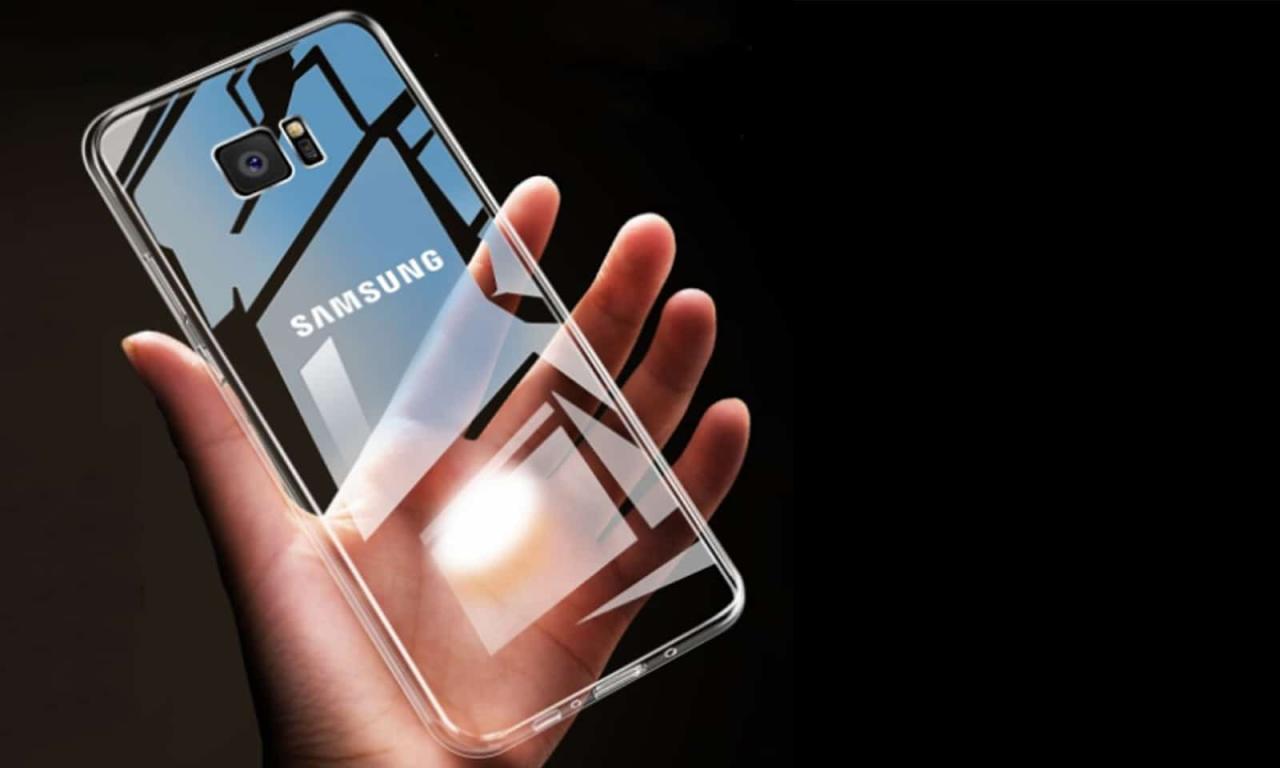
Despite its promise, the journey from a stunning prototype to a mainstream consumer product is fraught with substantial challenges that Samsung must meticulously address.
-
Durability and Structural Integrity: Glass, even strengthened variants like Gorilla Glass Victus, is prone to scratches and shattering. A phone that is predominantly transparent glass or polymer raises serious durability concerns. Samsung would need to pioneer a new class of transparent composite materials—perhaps incorporating clear ceramics or advanced polymers with self-healing nanocoatings. The structural frame, likely minimal, must provide immense rigidity to prevent flex and torsion, which could instantly destroy the delicate internal display layers.
-
Battery Life and Thermal Management: The space constraints for the battery are severe. The first generation of such a device may face significant battery life limitations, potentially lasting only half a day under moderate use. Furthermore, dissipating heat from the processor and other components in a confined, potentially non-metallic body is a major engineering hurdle. Inefficient thermal management could lead to performance throttling, discomfort, and accelerated component degradation.
-
Privacy in a See-Through World: This is perhaps the most significant social and practical hurdle. Using a transparent device in public inherently exposes your content to anyone in your vicinity. Samsung would need to develop intuitive and immediate privacy modes. This could involve hardware solutions like an electrochromic layer that can instantly frost the display at the touch of a button, or software solutions that use the front-facing camera to detect multiple faces in view and automatically blur sensitive content. User education on these features would be critical.
-
The Astronomical Cost Factor: The R&D, exotic materials, and low-yield manufacturing processes involved will make the first transparent phones exorbitantly expensive. They will initially be positioned as flagship “halo products,” affordable only to early adopters and tech enthusiasts. The cost will only come down with economies of scale, material science advancements, and iterative design simplifications over multiple product generations.
D. The Ripple Effect: Implications for the Broader Tech Ecosystem
The commercial release of a Samsung transparent phone would send shockwaves through the entire technology industry, catalyzing innovation and shifting market dynamics.
-
Intensified Competition and Market Differentiation: Samsung’s move would force immediate responses from competitors like Apple, Google, and Xiaomi. We would see a rapid acceleration in transparent display R&D across the board, leading to a new frontier in the flagship smartphone wars. It would create a clear (pun intended) differentiator in a market often criticized for incremental updates, pushing the narrative back towards radical innovation.
-
A Catalyst for Ancillary Technologies: The development would act as a rising tide for related tech sectors. It would drive demand for more efficient, smaller sensors, advanced transparent conductive materials, compact high-capacity batteries, and powerful, low-heat SoCs. This, in turn, would benefit other product categories, from transparent TVs and smart windows to next-generation wearables and automotive heads-up displays.
-
Redefining the Software and App Experience: Current mobile operating systems like Android (with Samsung’s One UI) are not designed for a transparent canvas. A fundamental UI/UX overhaul would be necessary. App developers would need new SDKs and design guidelines to create experiences that leverage translucency and depth. This could spawn an entirely new sub-industry of app development focused on layered, spatial, and context-aware applications.
-
Shifting Consumer Perception of Value: It would challenge consumers to reconsider what they value in a phone. Is raw processing power or camera megapixel count still the primary metric, or does the fundamental nature of the interface and its integration with reality become the key selling point? It could segment the market into traditional “slab” phones and new “window” devices, each serving different user philosophies.
Conclusion: More Than a Phone, A Portal

Samsung’s potential reveal of a transparent smartphone is not merely about launching a new product; it is about declaring a new direction for human-computer interaction. It represents the culmination of years of material science, display technology, and miniaturization. While the first generation will undoubtedly be a premium, niche device with compromises, its symbolic importance cannot be overstated. It serves as a tangible prototype of the future, proving that the boundary between our digital and physical worlds is not just permeable but can be elegantly fused. The transparent phone is a promise a promise of a world where technology enhances reality without obscuring it, where our devices become intuitive extensions of our perception rather than distracting slabs we constantly look down at. As we await official confirmation, one thing is clear: the future of mobility is not just in our hands; it is becoming something we can see right through.