
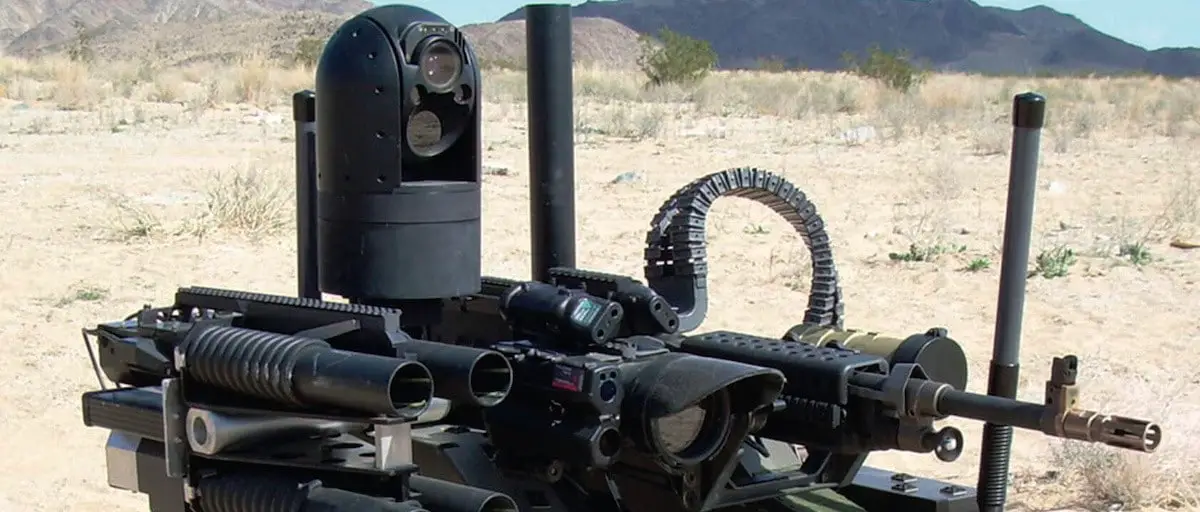
The unveiling of the Pentagon’s latest artificial intelligence-integrated combat platform marks a pivotal moment in modern warfare, signaling a transition from theoretical research to deployable systems. This advanced weapon system, developed under significant secrecy, represents not merely an incremental upgrade but a foundational shift in how military engagements might be planned, executed, and concluded. The integration of machine learning algorithms, real-time data fusion from myriad sensors, and autonomous decision-support capabilities creates a paradigm where the speed and precision of warfare are exponentially increased. The global defense community watches closely, analyzing the strategic, ethical, and operational ramifications of a world where AI becomes a central actor on the battlefield. This in-depth analysis explores the system’s core technologies, its potential deployments, the resulting strategic advantages, the intense ethical debates it ignites, and the broader implications for international security and arms control agreements in the 21st century.
A. Deconstructing the Core Architecture: More Than Just “Smart” Weapons
To understand the revolution, one must look beyond the label of “AI weapon.” This system is a networked ecosystem of interconnected technologies.
A. The Cognitive Engine: Advanced Machine Learning Models
At its heart lies a suite of machine learning models trained on petabytes of historical combat data, satellite imagery, communication intercepts, and simulation scenarios. Unlike static programming, these models continuously learn and adapt, identifying patterns and predicting adversarial movements with uncanny accuracy. This allows for proactive, rather than purely reactive, battlefield strategies.
B. The Sensory Web: Multi-Domain Data Fusion
The system does not rely on a single source of information. It integrates and cross-references real-time data from a vast array of sources: satellite networks, undersea sensors, unmanned aerial and ground vehicles (UxVs), electronic signal collectors, and even intelligence from allied networks. This creates a comprehensive, constantly updated “common operational picture” that is available to human commanders and AI analysts simultaneously.
C. The Decision-Support Core: Autonomous Course of Action Generation
Perhaps the most controversial component is its ability to generate, simulate, and recommend courses of action. When presented with a tactical objective, the system can rapidly compute thousands of potential scenarios, weighing factors like collateral damage estimation, resource expenditure, probability of success, and potential escalatory risks. It presents these options to human operators for final approval, compressing decision-making cycles from hours to seconds.
D. The “Loyal Wingman” and Swarm Integration
The platform is designed to command and coordinate semi-autonomous assets. This includes directing swarms of low-cost drones for reconnaissance or saturation attacks, and managing advanced combat aircraft acting as “loyal wingmen” to manned fighter jets. This distributes risk, overwhelms traditional air defenses, and creates complex, multi-vector threats that are difficult to counter.
B. Projected Operational Deployment and Strategic Advantages
The system is not intended for every conflict but is poised for specific, high-threshold scenarios.
A. Integrated Air and Missile Defense (IAMD)
In defending against advanced hypersonic missiles and sophisticated drone swarms, human reaction times are insufficient. The AI system can track thousands of incoming objects simultaneously, calculate intercept vectors in milliseconds, and prioritize threats based on projected impact points and payloads, coordinating anti-missile systems across ships, ground batteries, and airborne platforms.
B. Cyber-Electronic Warfare Convergence
The battlefield of the electromagnetic spectrum is paramount. This system can launch and defend against cyber-attacks while also managing electronic warfare operations jamming enemy communications, spoofing radar signals, and detecting hostile electronic emissions all as part of a synchronized battle plan that links kinetic and non-kinetic effects.
C. Logistics and Predictive Sustainment
A less glamorous but war-winning application is in military logistics. By analyzing usage rates, weather data, and enemy disruption patterns, the AI can predict supply needs, failures, and optimal routing for convoys, ensuring forces remain supplied while minimizing vulnerable stockpiles. This transforms the often-overlooked “tail” of the military into a precision instrument.
D. Strategic-Level Wargaming and Deterrence
At the highest levels, the technology serves as a supercharged wargaming tool. It can model large-scale conflicts, simulating outcomes of various strategies and thereby informing national defense policy and investment. The mere possession of such a system acts as a powerful deterrent, as adversaries must contend with an opponent capable of decision-making speeds they cannot match.
C. The Crucible of Controversy: Ethical, Legal, and Strategic Dilemmas
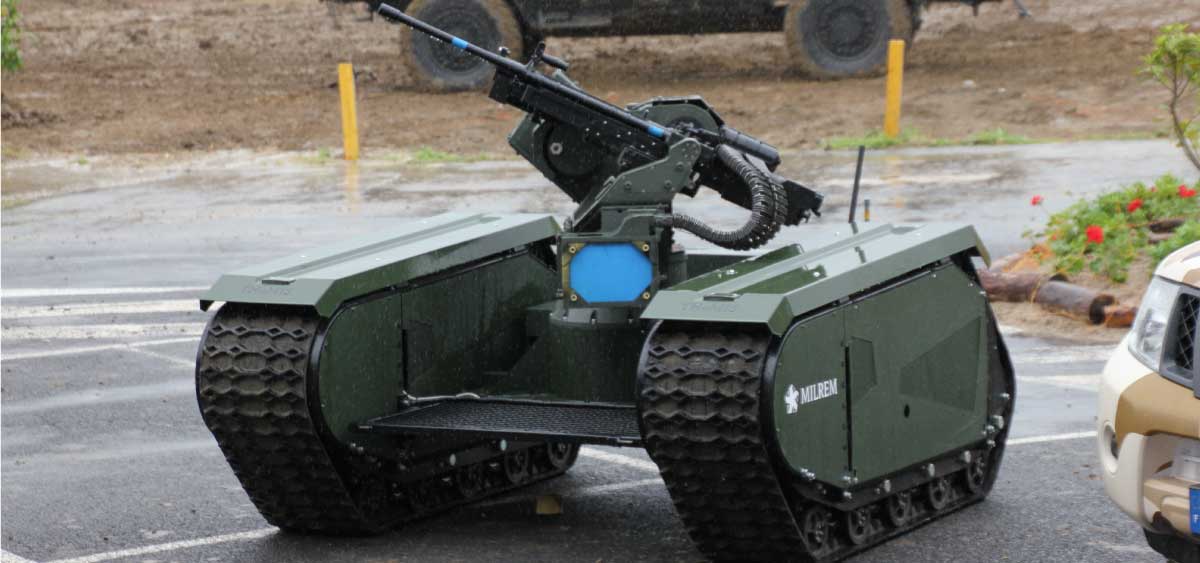
The deployment of such technology is fraught with profound questions that extend far beyond engineering.
A. The “Kill Chain” and Human-in-the-Loop
The paramount debate centers on autonomy in the use of lethal force. While the Pentagon insists on a “human-in-the-loop” for critical decisions, the sheer speed of future conflicts may pressure militaries to adopt “human-on-the-loop” (supervision) or even “human-out-of-the-loop” (full autonomy) for defensive systems. Defining meaningful human control at machine speeds remains an unresolved challenge.
B. Accountability and The Responsibility Gap
If an AI-driven action results in an unintended war crime, catastrophic escalation, or a technical failure causing mass casualties, who is held responsible? The programmer, the commanding officer, the manufacturer, or the machine itself? Current international law, including the Laws of Armed Conflict (LOAC), lacks clear frameworks for assigning blame in such scenarios, creating a dangerous accountability vacuum.
C. Algorithmic Bias and Unpredictable Emergent Behaviors
AI models are only as good as their training data. Biased or incomplete data could lead to discriminatory targeting or flawed strategic assessments. Furthermore, complex AI systems can exhibit emergent behaviors—actions not explicitly programmed by their creators that could be destabilizing or escalatory in a high-stakes military context.
D. The Proliferation Risk and Global Arms Race
The technology, while advanced, will inevitably diffuse. Both state and non-state actors will seek to develop or acquire similar capabilities, potentially leading to a destabilizing global AI arms race. The prospect of terror groups or rogue states using crude but effective AI-powered swarms or cyber tools presents a nightmare scenario for global security.
D. Global Reactions and the Path to Norms and Governance
The Pentagon’s unveiling has triggered a spectrum of international responses, highlighting the fragmented global approach to military AI.
A. Strategic Competitors: Russia and China
Both nations have accelerated their own military AI programs, viewing the U.S. development as a verification of its strategic importance. China, in particular, has merged its civil-military technological frontiers and is investing heavily in AI for command, control, and “intelligentized” warfare. A tripartite technological arms race is now undeniable.
B. Allied Nations: A Mix of Collaboration and Concern
Close allies like the UK, Australia (through AUKUS), and members of NATO are exploring collaboration and interoperability with the U.S. system. However, other allies express deep ethical concerns, with some advocating for a preemptive, legally-binding treaty to ban lethal autonomous weapons systems (LAWS), fearing they lower the threshold for conflict.
C. The United Nations and Diplomatic Efforts
Discussions at the UN Convention on Certain Conventional Weapons (CCW) in Geneva have been ongoing for years but are mired in geopolitical disputes and differing definitions. A consensus on a comprehensive treaty seems distant, though the dialogue itself raises awareness and may lead to softer norms of responsible use.
D. The Imperative for Technical Safety and Confidence-Building Measures
In the absence of hard law, experts advocate for parallel tracks: developing robust technical safety measures (like “kill switches” and rigorous testing standards) and establishing military-to-military confidence-building measures. These could include pre-notification of tests or agreements to keep humans in control of nuclear launch decisions, reducing the risk of miscalculation.
E. The Future Battlefield: Adaptation and Countermeasures
The advent of this technology guarantees that adversaries will develop counter-strategies, leading to a new cycle of innovation.
A. Adversarial AI and The Deception Game
The next frontier will be adversarial AI systems designed specifically to deceive, corrupt, or spoof enemy AI. This includes generating “deepfake” battlefield imagery, creating subtle data poisoning attacks, and using electronic warfare to inject false signals into an opponent’s sensory web, causing it to see ghosts or miss real threats.
B. Asymmetric and Low-Tech Responses
Not all counters are high-tech. Strategies like decentralization, the use of camouflage and concealment (CC), low-probability-of-intercept (LPI) communications, and classic guerilla tactics may prove effective against a system dependent on clear data signatures and pattern recognition.
C. Hardening Infrastructure and Quantum Computing’s Looming Shadow
Protecting the AI’s own data centers and communication links from kinetic and cyber attack becomes a top strategic priority. Furthermore, the future arrival of quantum computing threatens to break current encryption standards, potentially blinding or compromising AI systems reliant on secure data, sparking a race for quantum-resistant cryptography.
Conclusion: Navigating the Uncharted Terrain of Algorithmic Conflict
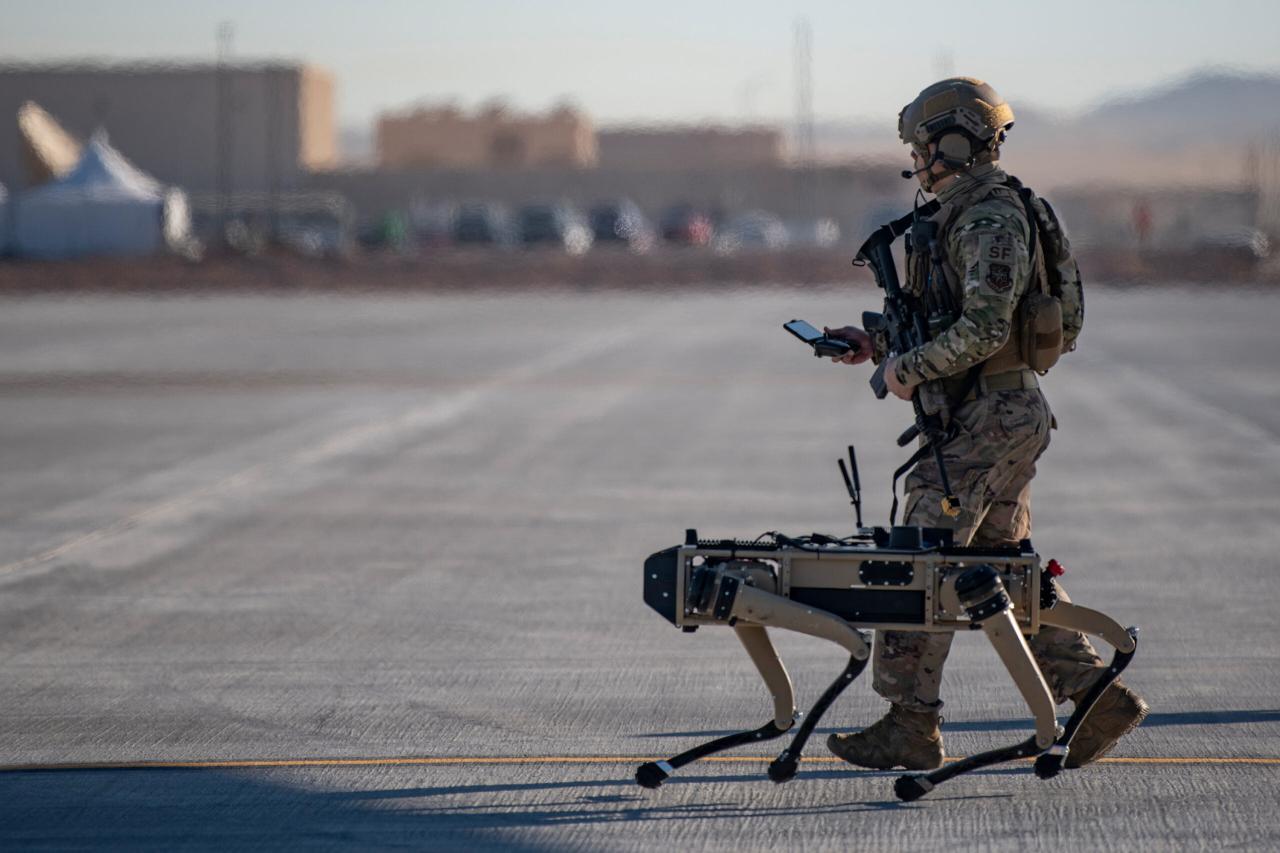
The Pentagon’s AI defense system is more than a new weapon; it is a harbinger of a new era in human conflict the age of algorithmic warfare. Its potential to save lives through precision and to protect national security through superior awareness is balanced by its capacity to trigger unintended escalation, obscure accountability, and destabilize the global order through rapid proliferation. The technology itself is neutral; its impact is defined by the wisdom, legal frameworks, and ethical guardrails erected by humanity. The immediate challenge is not just for engineers and soldiers, but for ethicists, lawyers, diplomats, and society at large. Proactive international dialogue, transparent safety protocols, and a steadfast commitment to maintaining meaningful human judgment over the ultimate decisions of war and peace are not optional ideals they are essential safeguards for our collective future. The unveiling is not an end point, but the opening chapter in a story we must all help write responsibly.