
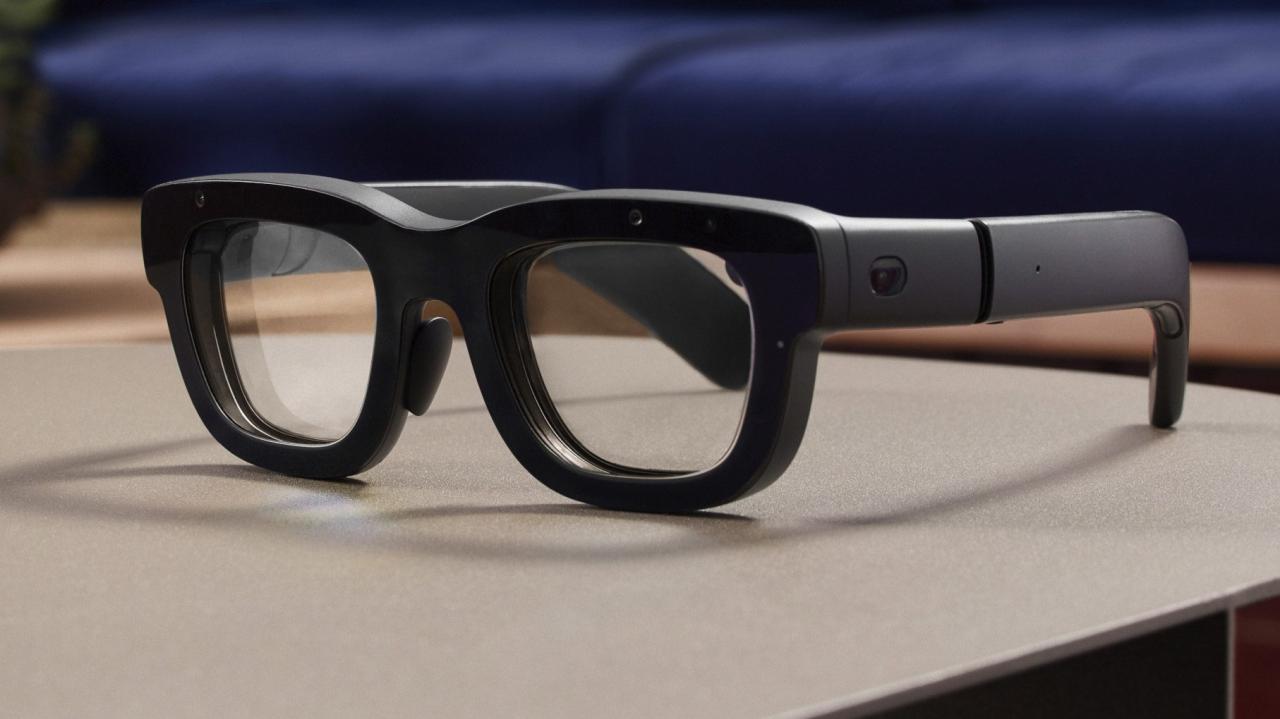
In the ever-evolving landscape of personal technology, a monumental shift is on the horizon. For over a decade, the smartphone has reigned supreme as our primary portal to the digital world. However, a convergence of technological advancements is paving the way for a successor that promises to be far more intuitive, immersive, and integrated into our daily lives: Augmented Reality (AR) Glasses. This transition from handheld devices to head-worn, context-aware computers is not a matter of if, but when. This article delves deep into the compelling reasons why AR glasses are poised to replace smartphones, the technological breakthroughs enabling this shift, the potential societal impacts, and the challenges that must be overcome to realize this future.
Introduction: The Limits of a Rectangle
The smartphone, a revolutionary device in its own right, confines our digital experiences to a small, flat screen. We peer into this glowing rectangle to access information, connect with others, and navigate the world a fundamentally disconnected process. It demands our focused attention, pulling us away from our physical surroundings and creating a phenomenon often termed “phubbing” (phone-snubbing). AR glasses propose a paradigm shift: instead of looking at a device, digital information is seamlessly overlaid onto the world around us. This shift from disruptive to assistive technology forms the core argument for their inevitable ascendancy.
A. The Core Advantages: Why AR Glasses Are Inevitable
The superiority of AR glasses as a platform stems from several fundamental advantages that address the intrinsic limitations of smartphones.
A.1. Hands-Free, Context-Aware Computing
The most immediate benefit is liberation from the need to physically hold a device. Imagine following a recipe with instructions floating beside your mixing bowl, receiving turn-by-turn navigation painted directly onto the road ahead, or checking your heart rate and meeting reminders in a peripheral display without ever reaching into your pocket. This seamless integration allows for continuous engagement with the physical world, enhancing both productivity and safety.
A.2. Spatial Computing and Immersive Interaction
AR glasses introduce the concept of “spatial computing,” where the digital and physical realms coalesce. Instead of interacting with 2D apps, you manipulate 3D holographic models with gestures, place persistent digital sticky notes on your refrigerator, or have a life-sized video call participant appear to sit on your living room sofa. This spatial interface is exponentially more natural and information-rich than a touchscreen.
A.3. Unlimited Screen Real Estate
Smartphone screens are constrained by physical size. AR glasses project virtual screens that are limited only by your field of view. You can have a sprawling 100-inch display for watching movies on a plane, multiple monitors for your work environment, or a private dashboard of widgets visible only to you all while maintaining awareness of your surroundings.
A.4. Enhanced Perception and Information Overlay
AR glasses can act as a perceptual superpower. They can translate foreign language signs in real-time, highlight the constellations in the night sky, display the name and details of a plant you’re looking at, or provide thermal vision. This constant, contextual layer of data turns everyday life into an interactive, informational experience.
A.5. Redefining Social Connection and Telepresence
While smartphones connected us via voice and video, AR glasses will enable true telepresence. Instead of a flat video call, you could share a virtual space where avatars or realistic holograms of participants can interact as if they were physically present. This could revolutionize remote work, education, and maintaining long-distance personal relationships.
B. The Technological Pillars: Building the Foundation
For AR glasses to successfully dethrone the smartphone, they must mature in several critical technological domains. Significant progress is already being made.
B.1. Optics and Display Systems
The challenge is to project bright, high-resolution, wide-field-of-view imagery onto transparent lenses in a compact form factor. Technologies like waveguides, micro-LEDs, and holographic optical elements (HOEs) are key. Companies are developing solutions that move from the bulky “ski goggle” prototypes to designs resembling fashionable eyeglasses.
B.2. Processing Power and Battery Life
Running complex computer vision, spatial mapping, and graphics rendering requires immense processing power. The solution lies in a hybrid approach: onboard chipsets for low-latency tasks (like tracking) paired with seamless 5G/6G connectivity to offload heavy computation to the cloud. Battery technology and power-efficient components are equally crucial for all-day wear.
B.3. Intuitive Input Modalities
The touchscreen will be obsolete. Future AR interfaces will rely on a multimodal blend of:
-
Voice Commands: Advanced, context-aware AI assistants.
-
Hand and Gesture Tracking: Precise recognition of fine finger movements for manipulating virtual objects.
-
Eye-Tracking: Enabling gaze-based selection and foveated rendering (which saves processing power by rendering only where you’re looking in high detail).
-
Neural Input (Emerging): Non-invasive sensors that detect subtle neural signals for ultimate control.
B.4. Spatial Audio and Advanced Sensors
Immersive 3D audio that aligns sounds with virtual objects in space is essential for believability. Furthermore, a sophisticated sensor suite including LiDAR, depth cameras, inertial measurement units (IMUs), and ambient light sensors is required to constantly map the environment and understand the user’s position within it.
B.5. The AI and Software Ecosystem
The true brain of AR glasses will be a pervasive, ambient artificial intelligence. This AI will need to understand context, filter relevant information, and anticipate user needs. Simultaneously, a robust software platform (an “AR OS”) and developer toolkit will be needed to spark the creation of killer apps that drive consumer adoption.
C. The Evolutionary Roadmap: From Companion to Replacement

The displacement of the smartphone will not happen overnight. It will follow a predictable, phased evolution.
C.1. Phase 1: The Smartphone Companion (Present – Near Future)
Current devices like Meta Ray-Ban stories or Snap Spectacles act as companions. They handle specific tasks like photography, audio, or basic notifications, while the smartphone remains the central processing hub. This phase is crucial for normalizing the form factor and gathering user data.
C.2. Phase 2: The Standalone AR Device (Mid-Term Future)
Devices will become fully autonomous, with their own cellular connectivity, robust processing, and a dedicated app ecosystem. They will be capable of performing most smartphone functions in a novel way, though many users may still carry a phone as a backup.
C.3. Phase 3: The Primary Computing Interface (Long-Term Future)
At this stage, AR glasses will be lightweight, socially acceptable, and powerful enough to render the smartphone obsolete for the majority. They will be your phone, computer, navigation system, and entertainment center—all integrated into your field of vision. The smartphone may persist as a niche or legacy device.
D. Societal Impact and Ethical Considerations
This technological shift will ripple through every aspect of society, bringing both profound benefits and serious challenges.
D.1. The Transformation of Industries
-
Retail & E-commerce: “Try before you buy” becomes literal for clothes, furniture, and makeup via virtual overlays.
-
Healthcare: Surgeons could see vital stats and 3D scans over a patient during procedures; medical students could practice on holographic anatomies.
-
Education & Training: Interactive, 3D historical recreations or mechanical breakdowns transform learning from passive to experiential.
-
Manufacturing & Repair: Complex assembly instructions or fault highlights can be projected directly onto machinery.
D.2. The Privacy Paradox
AR glasses, with their always-on cameras and sensors, represent a privacy nightmare if not properly regulated. The potential for unauthorized recording, facial recognition on a massive scale, and the collection of unprecedented behavioral data is staggering. A new ethical and legal framework for “augmented privacy” will be imperative, potentially involving hardware indicators (like recording lights) and strict data sovereignty controls.
D.3. The Digital Divide and Accessibility
Will this technology be a great equalizer or a new divider? It could offer incredible tools for people with disabilities (audio descriptions for the visually impaired, captions for the hard of hearing). However, high initial costs could create a new socio-economic gap between the “augmented” and the “un-augmented.”
D.4. Psychological and Social Effects
Constant information overlay could lead to cognitive overload or a new form of digital addiction. The distinction between reality and digital augmentation may blur for some. Socially, will it lead to deeper understanding or further isolation? Norms around acceptable use in conversations and public spaces will need to be renegotiated.
E. The Hurdles to Mass Adoption
Despite the promising future, significant barriers remain before AR glasses become mainstream.
E.1. Form Factor and Social Acceptance
They must become as lightweight, comfortable, and stylish as regular eyeglasses. People will not adopt a device that makes them look socially awkward or feels cumbersome.
E.2. The “Killer App” Conundrum
The smartphone had email, the web, and then the app store. AR glasses need their own undeniable, must-have application that demonstrates unique value beyond what a phone can do.
E.3. Cost and Infrastructure
Widespread adoption requires affordable pricing and ubiquitous, high-bandwidth, low-latency wireless networks (5G/6G) to support cloud processing.
E.4. Health and Safety
Prolonged use effects on eyesight, brain function, and spatial awareness must be thoroughly studied. Safety concerns, especially around distracted walking or driving, must be addressed at a system level.
Conclusion: Embracing a World Augmented

The journey from smartphones to AR glasses marks a transition as significant as that from desktop computers to mobile phones. It is a move from a tool we use to an environment we inhabit. While the path is fraught with technical, social, and ethical challenges, the potential to enhance human capability, dissolve the barriers of distance, and intertwine knowledge with our immediate perception is too powerful to ignore. The smartphone did not just change how we communicate; it changed how we live. AR glasses promise to take the next logical step: not by pulling us into a device, but by bringing the most useful parts of the digital world gracefully into ours. The race to build this future is already underway, and its winner will define the next era of human-computer symbiosis.