

The intersection of quantum computing and artificial intelligence represents one of the most transformative frontiers in modern technology. When applied to the monumental challenge of oncology, it sparks a revolution that promises to redefine our approach to understanding, diagnosing, and treating cancer. While sensational headlines like “Google’s Quantum AI Solves Cancer” capture the imagination, the reality is a nuanced, rapid, and profoundly impactful evolution in biomedical research. This article delves deep into how the synergy of Quantum AI is accelerating the fight against cancer, moving us from a one-size-fits-all model to a future of hyper-personalized, predictive, and precise medicine. We will explore the foundational technologies, the current state of research, the practical applications in development, and the ethical landscape of this powerful convergence, providing a comprehensive overview spanning over 2000 words.
Section 1: Demystifying the Core Technologies
To appreciate the breakthroughs, one must first understand the distinct yet interconnected pillars making them possible.
A. Quantum Computing: Beyond Binary Bits
Traditional computers use bits (0s and 1s). Quantum computers use qubits, which can exist in a state of 0, 1, or both simultaneously (superposition). Furthermore, qubits can be entangled, meaning the state of one instantly influences another, regardless of distance. This allows quantum computers to process vast, multidimensional datasets and explore countless possibilities in parallel a task that would take classical computers millennia. For cancer research, this means simulating molecular interactions at an unprecedented scale.
B. Artificial Intelligence and Machine Learning
AI, particularly machine learning (ML) and deep learning, excels at finding patterns in complex data. In oncology, ML algorithms analyze medical images, genomic sequences, and patient records to identify subtle correlations. However, their training is computationally intensive and often hits limits when dealing with the sheer combinatorial complexity of biological systems.
C. The Synergistic Power of Quantum AI
Quantum AI merges both fields. Quantum algorithms can drastically speed up the training of complex ML models and handle optimization problems intractable for classical computers. This synergy is not about replacing classical computers but creating a hybrid workflow where each handles the tasks it does best, supercharging the entire research pipeline.
Section 2: The Multifaceted Attack on Cancer: Key Application Areas
Quantum AI is not a single “silver bullet” but a versatile toolkit being applied across the entire cancer journey.
A. Drug Discovery and Molecular Simulation
The process of discovering a new drug is notoriously slow and expensive, often taking over a decade. A primary bottleneck is simulating how potential drug molecules interact with target proteins in the body.
-
Quantum Simulation: Quantum computers can model the quantum-mechanical behavior of molecules how electrons interact with high accuracy. This allows researchers to virtually screen thousands of candidate molecules for their ability to bind to a cancer-related protein (like KRAS or TP53), predicting efficacy and side effects before synthesizing a single compound in a lab.
-
Optimizing Drug Combinations: For complex regimens like chemotherapy, finding the optimal combination and dosage schedule is a massive optimization problem. Quantum algorithms can analyze patient-specific data to propose combination therapies that maximize tumor kill while minimizing toxic side effects.
B. Precision Oncology and Genomic Decoding
Every cancer is genetically unique. Quantum AI accelerates the analysis of a patient’s tumor genome, proteome, and metabolome to find the precise drivers of their disease.
-
Pattern Recognition in Multi-Omics Data: Quantum-enhanced ML can sift through petabytes of genomic, transcriptomic, and proteomic data to identify novel biomarkers, classify cancer subtypes with finer granularity, and pinpoint previously overlooked therapeutic targets specific to an individual’s cancer.
-
Predicting Treatment Response: By analyzing a patient’s tumor profile and historical data from millions of similar cases, AI models can predict which treatment (immunotherapy, targeted therapy, etc.) will have the highest probability of success, moving from trial-and-error to first-time-right treatment.
C. Early Detection and Diagnostic Imaging
Early detection dramatically improves survival odds. Quantum AI enhances diagnostic tools.
-
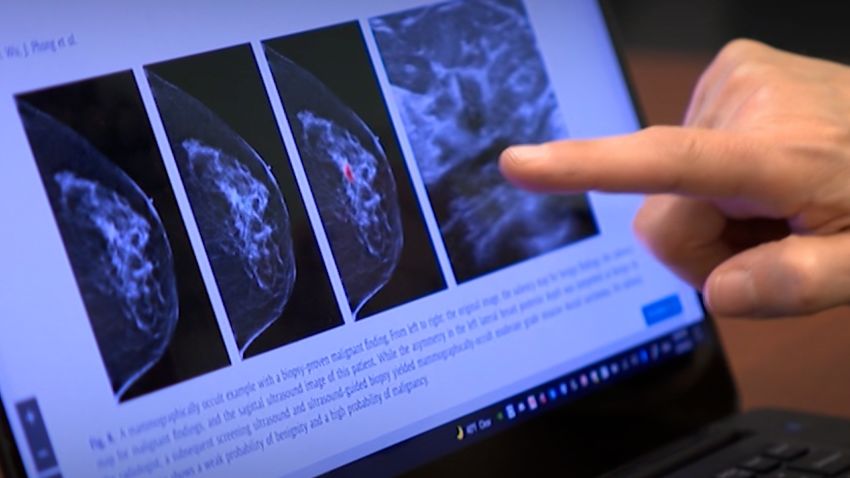
Image Analysis Enhancement: Quantum algorithms can improve the resolution and analysis of MRI, CT, and histopathology slides. They can train AI to detect microscopic tumors or precancerous lesions with superhuman accuracy, often catching signs invisible to the human eye in radiology and pathology.
-
Liquid Biopsy Decoding: Analyzing circulating tumor DNA (ctDNA) from a simple blood draw is a promising non-invasive detection method. Quantum ML can better distinguish the faint, fragmented signals of cancer DNA from normal cell-free DNA, enabling earlier and more localized cancer diagnosis.
D. Treatment Optimization and Radiotherapy Planning
Planning radiation therapy is a complex balancing act: maximizing dose to the tumor while sparing healthy tissue.
-
Quantum Optimization for Radiotherapy: The problem of calculating the optimal beam angles, shapes, and intensities is perfectly suited for quantum algorithms. They can compute highly personalized radiation plans in minutes instead of hours, achieving superior precision that reduces collateral damage and improves outcomes.
Section 3: Current State: Progress, Players, and Practical Milestones
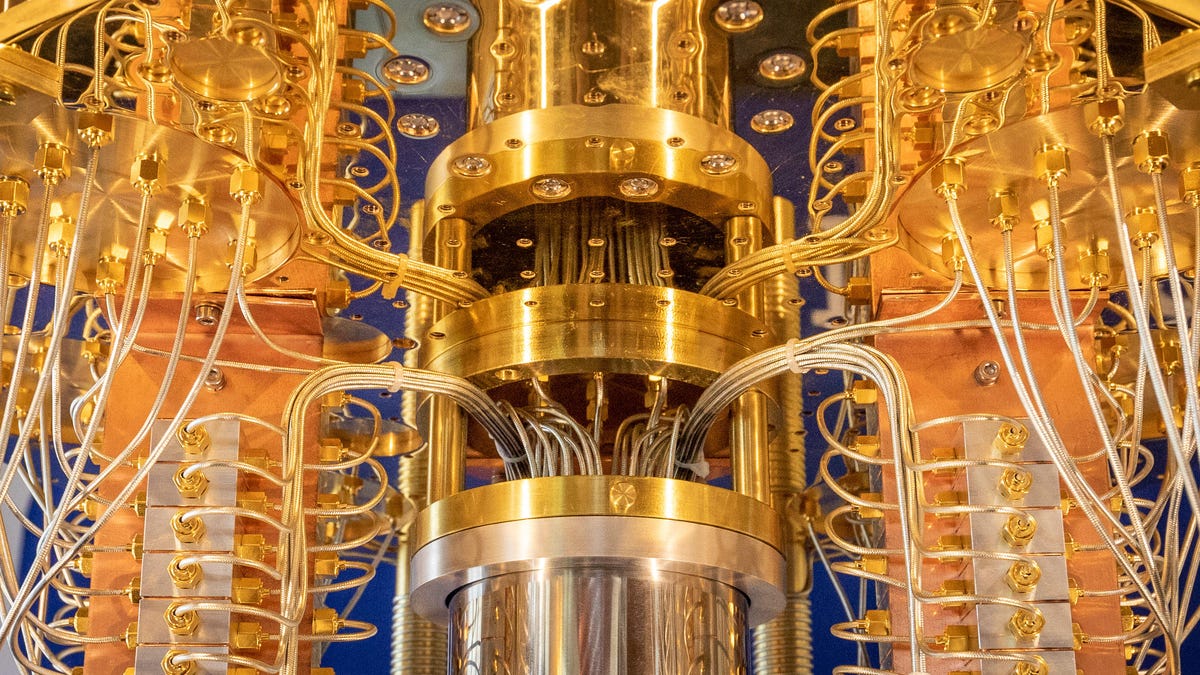
While a full “solution” is a future goal, tangible progress is underway.
A. Leading Initiatives and Collaborations
-
Google Quantum AI and Collaborators: While not having “solved cancer,” Google has partnered with institutions like the Cleveland Clinic to establish a Quantum AI lab focused on biomedical problems, including simulating enzyme interactions relevant to disease.
-
IBM Quantum and the Cleveland Clinic: Their joint venture specifically targets healthcare and life sciences, using quantum computing to accelerate drug discovery and personalize treatments.
-
Startups and Biopharma: Companies like ProteinQure, QC Ware, and Rahko are working directly with pharmaceutical giants (Roche, Boehringer Ingelheim) to apply quantum computing to molecular design for oncology targets.
-
Academic Consortia: Universities worldwide are exploring quantum algorithms for protein folding (a key problem in cancer) and genomic analysis.
B. Recent Demonstrations of Potential
-
Simulating Key Molecules: Researchers have used quantum processors to simulate small molecules like penicillin or portions of more complex ones. The pace of scaling these simulations is accelerating.
-
Quantum-Inspired Algorithms: Even before fault-tolerant quantum computers arrive, “quantum-inspired” algorithms run on classical supercomputers are showing speed-ups in oncology-relevant optimization problems, proving the value of the mathematical approach.
Section 4: Critical Challenges and the Road Ahead
The path is fraught with technical and practical hurdles.
A. Technical Hurdles
-
Qubit Stability and Error Correction: Current quantum processors (NISQ devices) are prone to noise and errors. Achieving fault-tolerant quantum computing with millions of stable qubits is essential for large-scale biomedical simulations but remains years away.
-
Algorithm Development: Creating effective, error-resistant quantum algorithms for specific biological problems is a major field of research in itself.
-
Data Integration and Quality: Quantum AI requires vast, high-quality, and standardized datasets. The fragmentation and siloing of medical data present a significant obstacle.
B. Ethical and Societal Considerations
-
Data Privacy and Security: Using patient data to train these models raises critical questions about consent, anonymization, and the potential for quantum computers to break current encryption.
-
Equity and Access: There is a risk that such advanced, expensive technology could widen global health disparities, making cutting-edge cancer care available only to the wealthy or those in specific nations.
-
Interpretability and Trust: The “black box” nature of some AI models, compounded by quantum complexity, could make it difficult for clinicians to understand and trust the recommendations, posing a barrier to adoption.
Section 5: The Realistic Future Timeline
A. Short-Term (Next 2-5 years): Hybrid quantum-classical approaches will solve niche optimization problems in treatment planning and logistics. Quantum-inspired algorithms will improve drug screening pipelines. Enhanced diagnostic AI tools, developed with quantum-accelerated training, will enter clinical use.
B. Medium-Term (5-15 years): Early fault-tolerant quantum computers will begin accurately simulating medium-sized molecules directly involved in cancer pathways, leading to the discovery of novel drug candidates. Personalized treatment recommendation engines powered by Quantum AI will become more sophisticated and widespread.
C. Long-Term (15+ years): The vision of fully simulating complex cellular processes or a patient’s “digital twin” for virtual treatment testing may become feasible, fundamentally transforming oncology from a reactive to a predictive science.
Conclusion
The narrative that “Google’s Quantum AI Solves Cancer” is an oversimplification of a profound and ongoing scientific endeavor. The truth is more compelling: Quantum AI is providing a set of revolutionary tools that are dramatically accelerating every facet of the war on cancer. From unmasking the disease’s molecular origins to crafting bespoke therapies and enabling ultra-early detection, this technological convergence is breaking down barriers once thought insurmountable. While challenges in hardware, software, and ethics remain significant, the trajectory is clear. We are not at the end of the journey, but we have entered a new and immensely powerful chapter, one that brings genuine hope for transforming cancer from a often-lethal diagnosis into a manageable, and ultimately preventable, condition.