
The landscape of human-computer interaction is undergoing a revolutionary transformation, moving beyond screens and keyboards into the very fabric of our biological being. At the forefront of this audacious frontier is Neuralink, the neurotechnology company founded by Elon Musk. For years, the public has followed its progress through flashes of demonstration with animal models, ambitious promises, and intense ethical debate. However, in early 2024, the narrative shifted from speculative future to tangible present with the release of the preliminary results from its first-in-human clinical trial. This milestone represents not just a corporate achievement but a pivotal moment in medical science and human augmentation. This article provides a comprehensive, in-depth analysis of Neuralink’s first human trial results, exploring the technology’s mechanics, the detailed outcomes, the profound implications for patients with severe neurological conditions, the ethical labyrinth it navigates, and the potential future it heralds for humanity. We will dissect every available facet of this breakthrough, moving beyond headlines to understand the true significance of implanting a coin-sized computer into a human brain and enabling control of a digital world through thought alone.
The Technological Marvel: Deconstructing the N1 Implant and Surgical Robot
Before delving into the results, it is imperative to understand the sophisticated apparatus that makes this feat possible. Neuralink’s system is a symphony of advanced engineering, comprising two core components: the N1 implant and the precision surgical robot.
A. The N1 Implant: A Coin-Sized Neural Lace
The physical interface with the brain is the N1 implant, a device about the size of a large coin. Its design prioritizes miniaturization, wireless functionality, and biocompatibility.
-
Ultra-Fine Electrodes: The core of the implant consists of over 1,024 ultra-thin, flexible polymer threads. Each thread is studded with electrodes so minute they are measured in microns far thinner than a human hair. This scale is critical for interfacing with individual neurons while minimizing tissue damage and scarring (gliosis) that plagues older, stiffer electrode arrays.
-
Distributed Architecture: These threads are not clustered but fanned out across a region of the brain, allowing for sampling from a wider, more distributed population of neurons. This provides a richer, more nuanced data stream of neural activity compared to a single, dense probe.
-
Hermetic Sealing and Biocompatibility: The implant’s chip and electronics are hermetically sealed within a biocompatible enclosure, designed to withstand the harsh, corrosive environment of the human body for decades. This long-term viability is essential for a permanent assistive device.
-
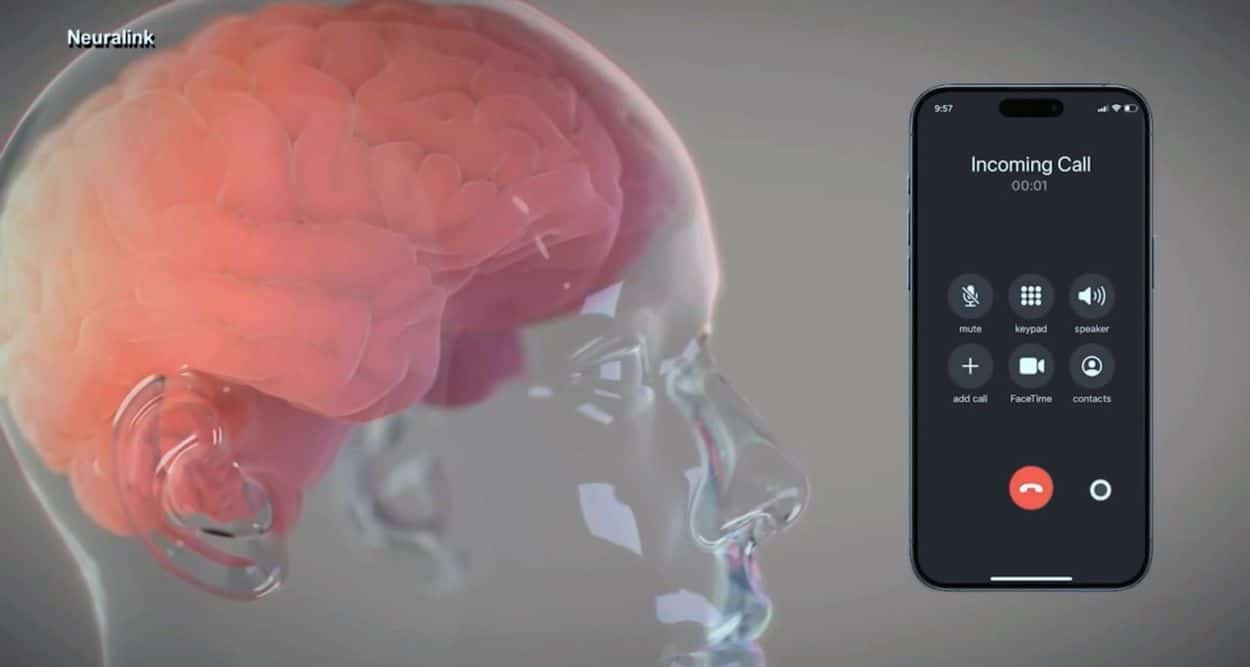
Wireless Power and Data: A monumental advancement is the fully wireless nature of the system. The N1 is inductively charged through a compact, wearable device behind the ear. This same link handles high-bandwidth data transmission, eliminating the need for transcutaneous wires a major infection risk in previous brain-computer interfaces (BCIs).
B. The R1 Surgical Robot: Precision at a Microscopic Scale
Implanting these delicate threads into the gelatinous cortex of the brain, beneath the protective dura mater, is a task far beyond human hands. Neuralink developed the “R1” robot for this purpose.
-
Sub-Micron Precision: The robot combines advanced imaging (optical coherence tomography) with robotic actuation to insert each thread with micron-level precision, avoiding surface vasculature and targeting specific cortical layers.
-
Automated Insertion: The process is largely automated, reducing human error and variability. The robot can insert all threads rapidly in a single surgical session, which is crucial for patient safety and procedural scalability.
This combination of distributed, flexible electrodes and robotic surgery aims to solve the historic trade-off in neural interfaces: obtaining high-quality, stable signals without causing significant, inflammatory brain damage.
The PRIME Study: Ground Zero for Human Trials
Neuralink’s clinical investigation is formally named the “PRIME” study (Precise Robotically Implanted Brain-Computer Interface). It is conducted under an FDA-approved Investigational Device Exemption (IDE).
A. Primary Objective and Patient Cohort
The primary goal of this early feasibility study is to evaluate the safety of the implant and surgical robot, and secondly, to assess the initial functionality of the BCI. The initial participant cohort is exceptionally specific: individuals aged 22 and above living with quadriplegia (paralysis of all four limbs) due to cervical spinal cord injury or amyotrophic lateral sclerosis (ALS). These candidates must have a consistent and reliable caregiver. This focus addresses an unmet medical need where traditional rehabilitation offers limited recovery.
B. The Initial Participant: A Landmark Case Study
The first recipient, Noland Arbaugh, a 29-year-old man paralyzed from the shoulders down after a diving accident, has become the public face of the trial. His participation provides the first human data point.
Detailed Analysis of the Initial Results and Performance Metrics
The initial results, shared by Neuralink via a live demonstration and subsequent blog updates, have provided concrete, though preliminary, performance data.
A. Recovery and Safety Profile
-
Surgical Outcome: Arbaugh underwent successful implantation in the region of the brain controlling movement intention (the precentral gyrus, or motor cortex). He was discharged from the hospital within 24 hours—a remarkably short stay for major brain surgery.
-
Adverse Events: The company reported no serious adverse events or surgical complications like bleeding or infection initially. However, a later disclosure revealed a significant technical issue: a number of the ultra-fine electrode threads retracted from the brain tissue, likely due to post-surgical movement, leading to a reduction in the number of effective electrodes. This is a critical data point highlighting the real-world engineering challenges of maintaining a stable neural interface.
-
Adaptation and Signal Optimization: Rather than revising the hardware, Neuralink’s engineering team responded with software updates that improved the sensitivity of the remaining electrodes and refined the decoding algorithms. This underscores the system’s dual nature: it is as much a software platform as a hardware device.
B. Functional Performance: From Thought to Digital Action
The functional outcomes, despite the hardware setback, have been dramatic.
-
Cursor Control Proficiency: Arbaugh demonstrated the ability to control a computer cursor with his thoughts alone. He achieved tasks such as moving a cursor across a screen, clicking, dragging, and dropping. This was not a slow, deliberate process; videos showed fluid, continuous control.
-
Quantified Performance Metrics: Neuralink provided quantitative benchmarks. Arbaugh achieved a “bits-per-second” (BPS) rate a standard metric for BCI speed and accuracy that surpassed any previously documented stable BCI system at the time of reporting. Specifically, he reached speeds that allowed for practical, real-time use.
-
Real-World Applications Demonstrated:
-
Digital Communication: He used the implant to operate standard computer software, browse the internet, and communicate via messaging and social media platforms independently.
-
Entertainment and Quality of Life: Perhaps the most emotionally resonant demonstration was Arbaugh using the BCI to play online chess and video games (like Civilization VI) competitively. This not only showcased control complexity but highlighted the technology’s impact on recreation and mental engagement a crucial aspect of quality of life often overlooked.
-
“Telepathy” Prototype: The system’s initial product, named “Telepathy,” was demonstrated. Arbaugh used thought to control a separate laptop, showcasing the potential for the implant to serve as a universal wireless interface for any compatible digital device.
-
Comparative Analysis: How Neuralink Stacks Against Legacy BCI Systems
To appreciate Neuralink’s progress, a comparison with established BCIs is essential.
A. Invasive Research Systems (e.g., BrainGate Consortium)
Systems like BrainGate use the Utah Array, a small, rigid bed of nails implanted into the cortex. They have achieved remarkable results over two decades, enabling typing, robotic arm control, and restoration of touch. However, they typically rely on percutaneous wired connectors, limiting long-term use and posing infection risks. Neuralink’s wireless approach and higher initial electrode count (even with retraction) represent a step forward in practicality and user freedom.
B. Non-Invasive Systems (EEG Headsets)
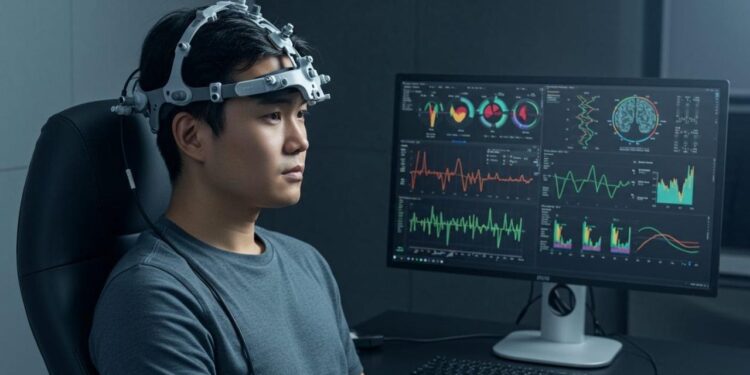
Commercial EEG headsets (like Emotiv) are safe and affordable but suffer from very low spatial resolution and signal fidelity. They can detect broad brain states but cannot decode the precise motor intentions that Neuralink can. They are tools for basic control or meditation, not for high-performance assistive technology.
C. Other Emerging Invasive Systems (e.g., Synchron Stentrode)
Companies like Synchron offer a less invasive approach, threading an electrode array through blood vessels to rest against the cortex. This avoids open-brain surgery but currently offers lower data bandwidth compared to direct cortical interfaces. Neuralink’s approach is more invasive but aims for a higher-performance ceiling.
Neuralink’s early data suggests it may be bridging the gap between the high performance of research BCIs and the practical, wireless, user-friendly design needed for widespread adoption.
The Profound Implications: From Medical Treatment to Human Augmentation
The success of the first trial opens a cascade of potential implications across multiple domains.
A. Near-Term Medical Applications
The immediate pathway is clear: restoring autonomy for people with severe motor disabilities.
-
Advanced Communication: For those with “locked-in syndrome” or late-stage ALS, the BCI could enable fluent, rapid communication, restoring a fundamental human connection.
-
Environmental Control: Thought-controlled smart homes, wheelchairs, and other assistive devices could grant unprecedented independence.
-
Functional Recovery: The ultimate goal is to use the decoded signals to stimulate muscles or control functional electrical stimulation (FES) systems, effectively creating a “digital bypass” around spinal cord injuries to restore limb movement.
B. Long-Term and Speculative Frontiers
Elon Musk’s long-term vision extends beyond medical therapy to symbiotic human-AI interaction.
-
Mitigating Existential AI Risk: Musk has posited that a high-bandwidth BCI could allow human cognition to keep pace with artificial general intelligence (AGI), creating a symbiosis rather than risking obsolescence.
-
Cognitive Augmentation: Concepts like accessing vast databases instantly, controlling advanced prosthetics with natural dexterity, or even sharing thoughts and sensory experiences (“consensual telepathy”) enter the realm of theoretical possibility.
-
Treating Neurological Disorders: Future iterations could target different brain regions to potentially manage conditions like epilepsy, depression, OCD, or Alzheimer’s disease through precise neuromodulation.
Navigating the Ethical and Safety Labyrinth
The speed and commercial nature of Neuralink’s development have ignited intense ethical scrutiny. Any discussion of its results must be framed within these critical concerns.
A. Informed Consent in Vulnerable Populations
Are individuals with devastating disabilities, often with limited options, truly able to give fully voluntary, pressure-free consent? The process must be meticulously guarded against undue influence or therapeutic misconception—the false hope of a cure.
B. Data Privacy and Security
The BCI accesses the ultimate private data: one’s thoughts and neural activity. Who owns this data? How is it stored, used, and protected from hacking or coercive extraction? Robust, legislated neuro-rights frameworks are urgently needed.
C. Physical Safety and Long-Term Risks
The initial thread retraction incident is a stark reminder of the unknown long-term biological integration. Risks of chronic inflammation, scar tissue formation, electrode degradation, and unknown effects of long-term electromagnetic exposure must be studied over decades.
D. Animal Welfare Allegations
Neuralink has faced serious allegations from animal rights groups and federal investigations regarding the suffering and deaths of test primates. While the human trial is a separate phase, the company’s ethical culture and transparency in all research practices remain under a microscope.
E. Equity and Access
Will this be a technology only for the wealthy? The cost of the device, surgery, and ongoing support could create a new divide: the neuro-enhanced and the neuro-typical. Ensuring equitable access as a medical treatment is a monumental societal challenge.
Conclusion: A Tentative but Transformative First Step
Neuralink’s first human trial results are undeniably historic. They provide a compelling, real-world proof-of-concept that a high-bandwidth, wireless, minimally disruptive brain-computer interface can be implanted in a human and can restore meaningful digital agency to a person with quadriplegia. The performance metrics, particularly the bits-per-second rate, suggest a tangible leap in practical BCI usability.
However, this is Chapter One, not the conclusion. The journey ahead is long and fraught with challenges. The hardware reliability issue encountered is a sobering reminder of the immense difficulty of creating a stable, long-term interface with the brain’s delicate tissue. The ethical, safety, and societal questions are profound and require global, multi-stakeholder engagement to address responsibly.
The true significance of these results lies in their dual nature: they are both a remarkable medical breakthrough for people with paralysis and a provocative glimpse into a future where the line between human thought and machine action becomes seamlessly blurred. As the PRIME study continues with more participants and longer follow-up, the world will be watching, waiting to see if this technology can evolve from a dazzling demonstration into a safe, reliable, and ethically governed tool for healing and perhaps, eventually, for expanding the very horizons of human experience.